


20 May Andalusia – ASITRAVEL Route System – Big Five Itinerary
After finishing my last article from Andalusia, an article in which I detailed how I spent 22 days in this amazing part of Spain, I left at the end of the article 3 ideas of itineraries that could serve as a starting point for your next trip(s) to Andalusia.
So, in this article and the two next coming up I will break those itineraries apart and offer you more information in hope you will get enough information to follow one or to build your own itinerary.
In this post I will start with what I consider the base for Andalusia, the most important cities and from here we will keep adding, replacing and building two more routes in the next articles.
ROUTE 1 — THE BIG FIVE
Seville → Córdoba → Granada → Málaga → Cádiz
7–8 days | high intensity | first-time essential route
Route Logic
This is the essential Andalusia backbone, built as a progression:
• Seville → imperial start (scale, energy, architecture)
• Córdoba → compressed history (intense but short)
• Granada → emotional peak (Alhambra, vertical city)
• Málaga → reset (modern coast, food, breathing space)
• Cádiz → slow landing (Atlantic, silence, time dilation)
STOP 01 — SEVILLE
I’ve been to Seville twice.
Both times during Semana Santa — and if you’ve ever been, you know it completely changes the city.
The first time, Seville didn’t really welcome me.
It was grey, rainy and a bit heavy. Not the kind of place that opens up easily. I remember walking through the streets thinking that maybe I had built it too much in my head.
Then the weather changed.
And slowly, the city changed with it.
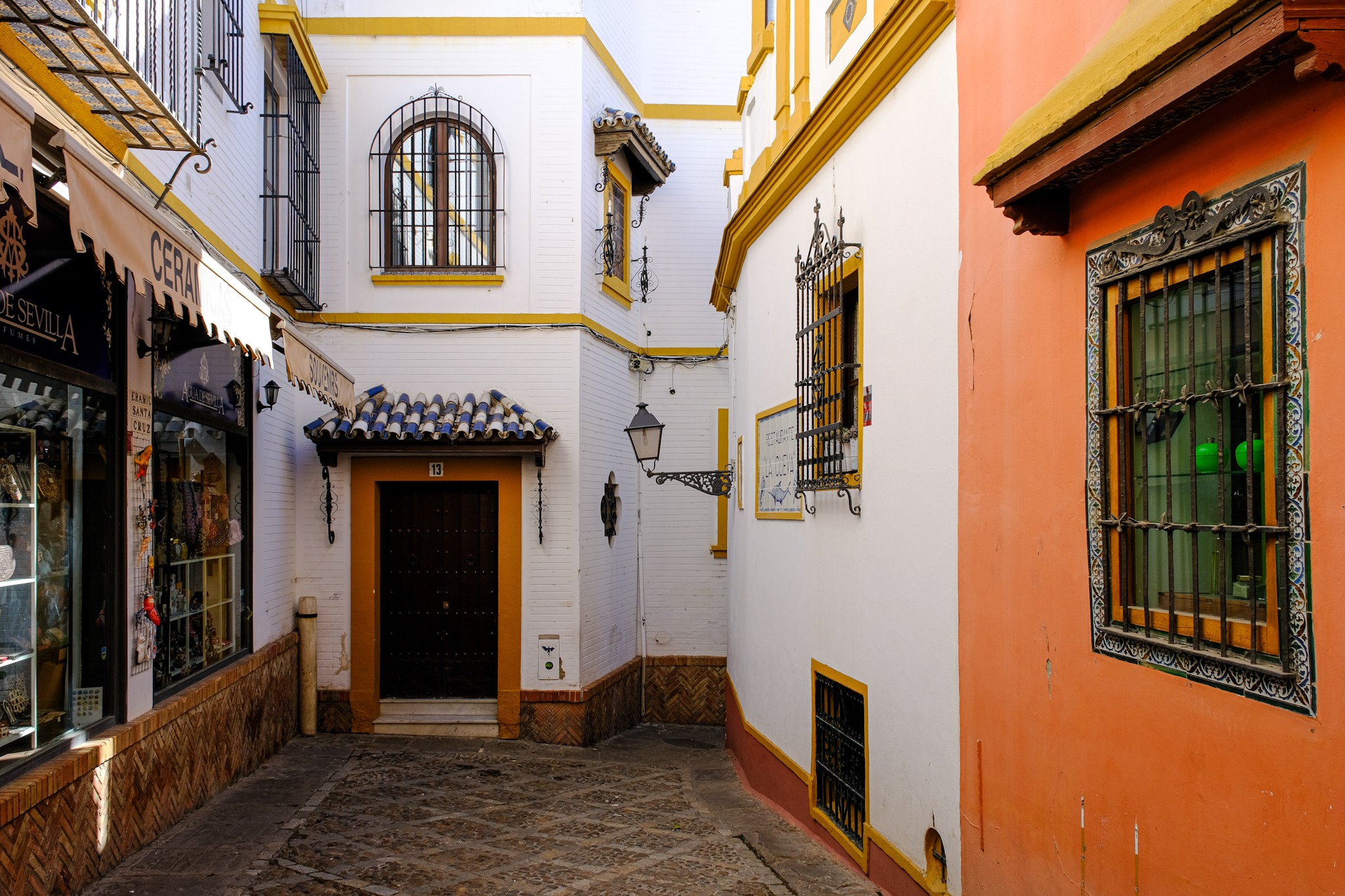
The second time was different from the first hour. Warm, bright, alive. I was coming back to a place I had thought about for years, and this time it felt like I finally saw it the way it was supposed to be seen.
Instead of trying to see everything, I started looking at it differently.
In an ideal world, we would spend a week here. Maybe even a month. Just walking, getting lost, discovering things on our own.
Or we would read every guide about hidden places and run from one side of the city to the other, trying to check them all.
But what I’m proposing is something else.
No matter if you spend 2, 3 or 5 days in Seville, you will always miss something. No matter how many blogs you read or how many itineraries you follow.
So instead of trying to do it all, I’d rather give you a short list of places that I think actually matter.
And leave you with enough time to just walk.
To see the people, the cafés, the restaurants, the way the streets feel at different hours of the day.
Because a trip shouldn’t be done only with a map in your hand.
At some point, you have to let yourself enter the place you came to see.
The Only Places I Would Not Skip in Seville
Real Alcázar of Seville
This is probably the most beautiful Alcazar I’ve seen in Andalusia.
It’s incredibly well preserved, with details everywhere you look and a garden that feels like a place on its own, not just something attached to the palace.
For me, this is the best place to start your time in Seville.
If you already know you want to visit it, I strongly recommend booking your ticket in advance because this is one of the places in Andalusia where availability can become a problem surprisingly fast.
Skip-the-line tickets for the Real Alcázar of Seville can be found here.
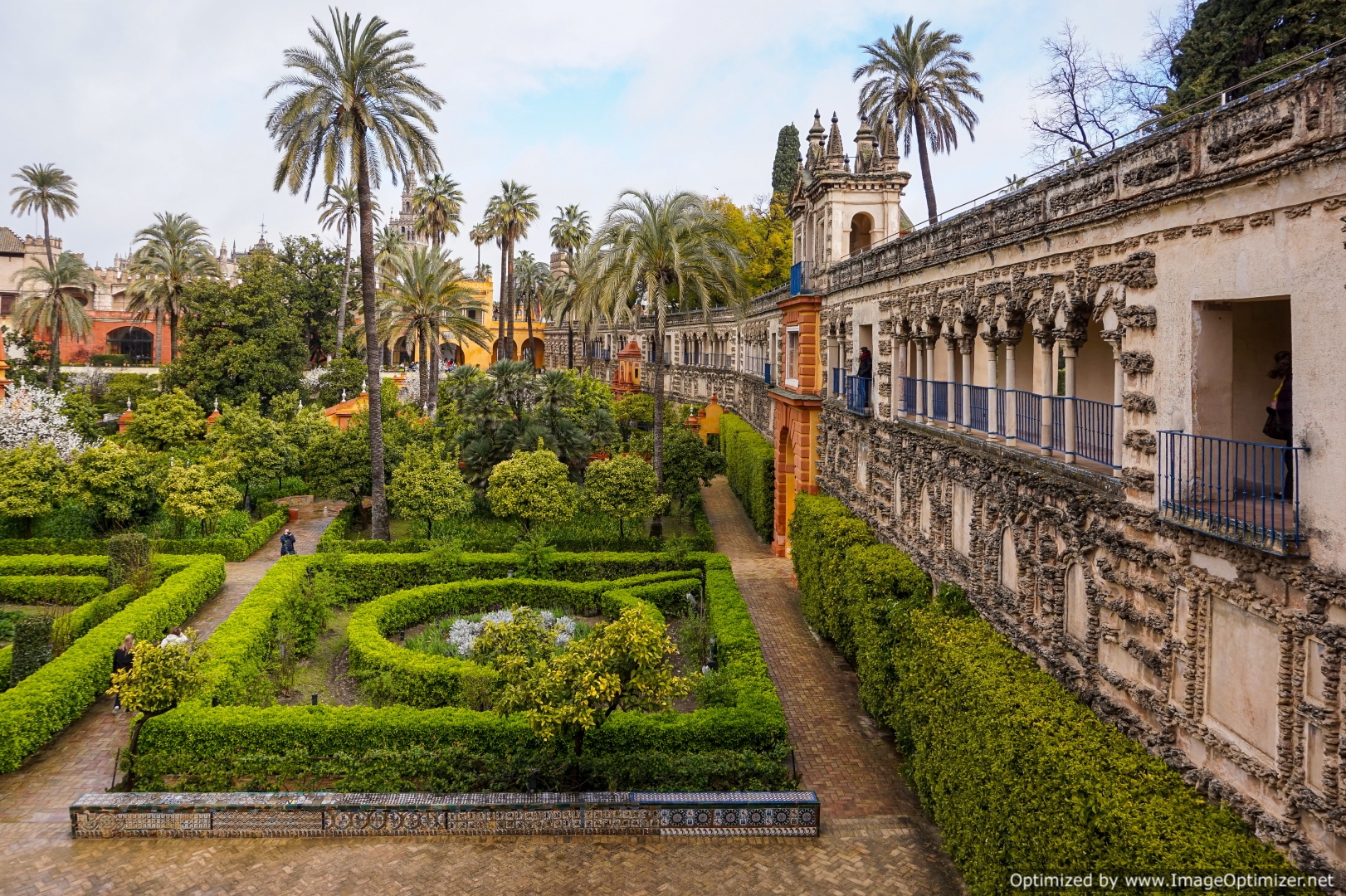
You will easily spend two hours inside, but they won’t feel long. It’s the kind of place where you slow down without even realizing it, moving from one space to another and constantly finding something new to look at.
I’ve been here twice already, and I know that when I return to Seville, this will be one of the first places I’ll go back to.
La Giralda
In my opinion, this is a must as well.
The climb is not steep at all. It’s actually quite easy compared to other towers, but you should still wear comfortable shoes. Especially on the way down — you don’t want to mess up your toes and nails halfway through your trip.
Once you reach the top, it all makes sense.
It’s one of the highest vantage points in the city, and from up there you can see Seville in a completely different way. Rooftops, narrow streets, the whole layout of the city starts to come together.
And there’s a small moment there where you just look around and realize that in the next hours or days, you’ll be walking through many of those streets you’re seeing from above.
That alone makes it worth it.
If you prefer organizing everything before arriving in Seville, you can also book the Cathedral and La Giralda access online beforehand.
You can check ticket availability here.
Seville Cathedral
In my opinion, the cathedral is still a must.
I’ve been inside twice already, and to be honest, I probably wouldn’t go in a third time. But for a first visit to Seville, it’s something you shouldn’t skip.
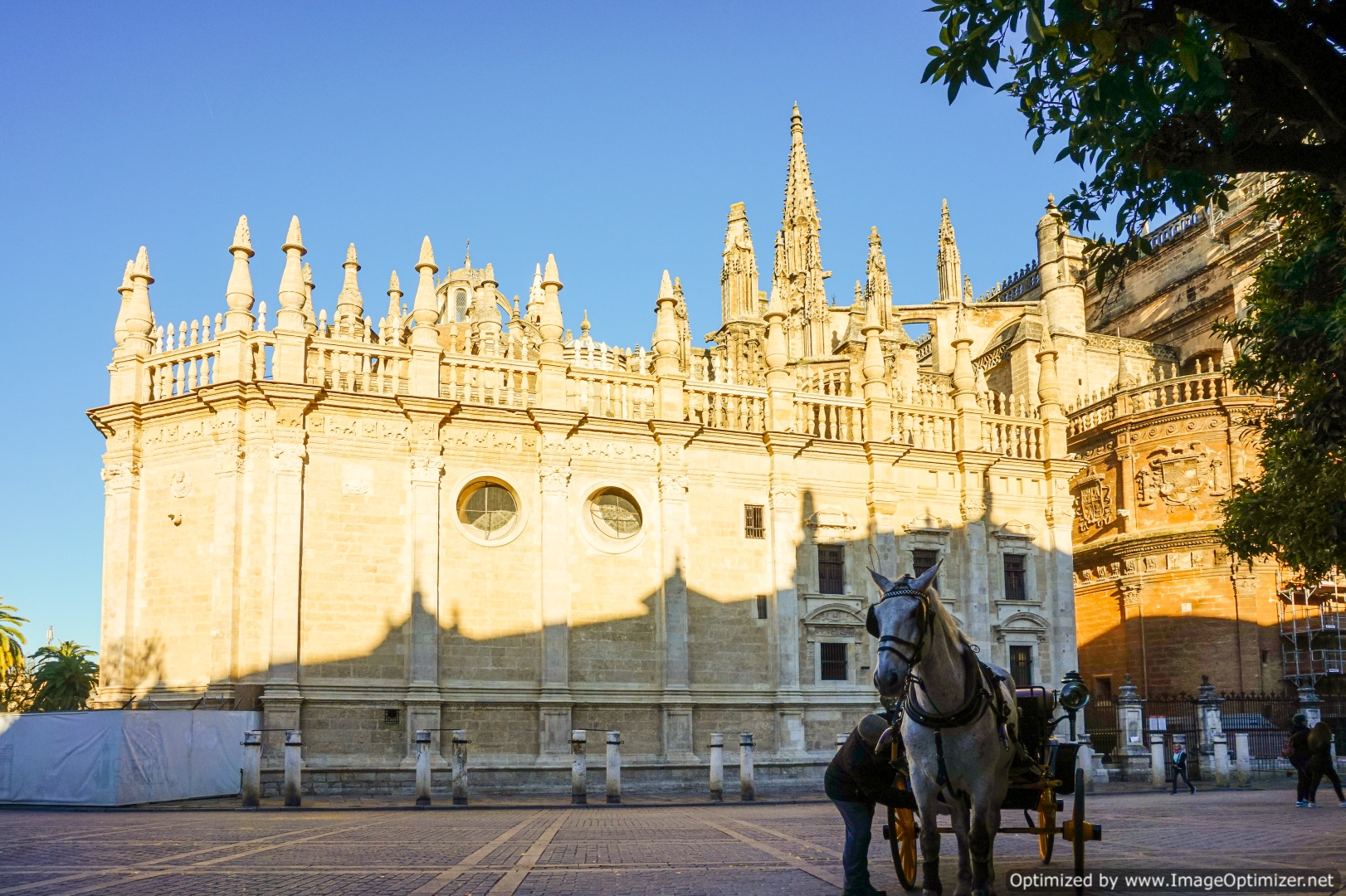
The scale of it is what stays with you. The interior space, the sheer size, and small things like the tomb of Christopher Columbus — all of these together make it worth seeing at least once.
A big advantage is that it’s right next to the Real Alcázar of Seville, so it fits naturally into your route without any extra effort.
Plaza de España
Go see it and take your time with it.
Look at the details, the tiles, the bridges, the way everything comes together. It’s one of those places where the more you look, the more you notice.
If you feel like it, grab a small boat on the canal or just sit for a while and watch what’s happening around you. Sometimes you’ll catch flamenco dancers performing, and that adds even more to the atmosphere.

It’s a complete place. And one you should see when you’re in Seville.
Yes, it can get crowded. But let’s be honest — we’re 8 billion people on this planet. Most places worth seeing will be crowded, no matter the season.
So instead of trying to avoid it, just go, accept it, and enjoy it for what it is.
Barrio de Santa Cruz
Just enjoy it.
Walk, let go, don’t try to follow a route. Look at the details on the walls, the small shops, the people passing by. This is Seville.
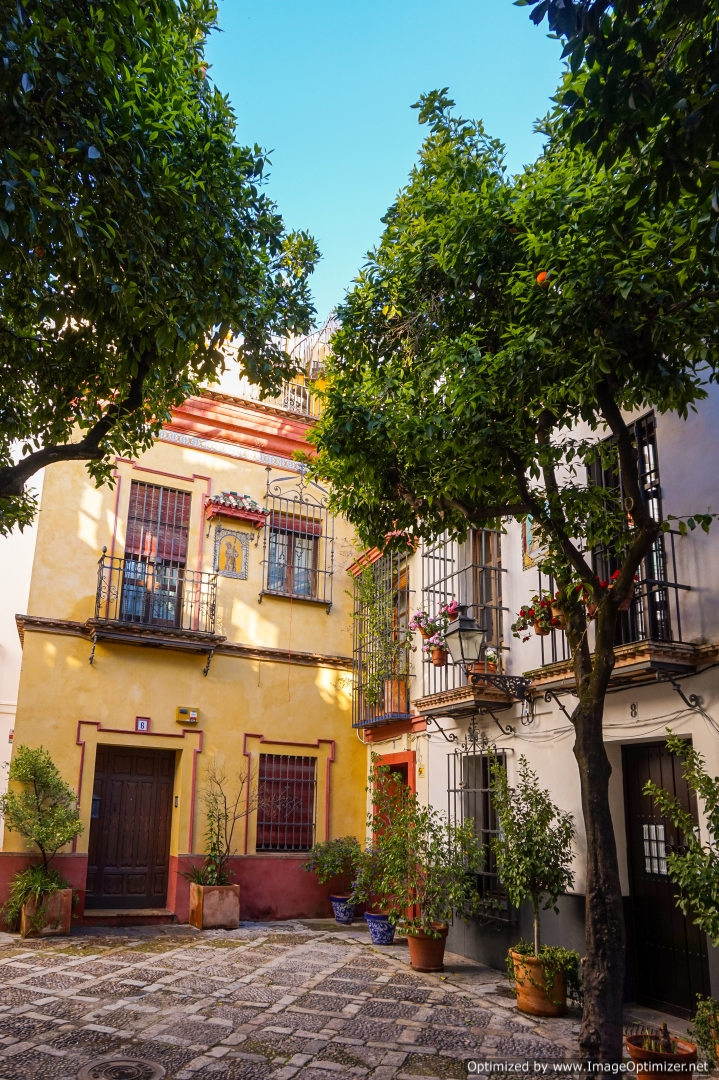
This is why you came here.
So don’t rush like there’s always something better around the corner. There isn’t.
Slow down your walk. Take a few extra turns. Stay a bit longer on a street that feels right.
That’s how you see this place.
Iglesia del Salvador
It’s not far from the main sights, and getting there is part of the experience.
You walk through busy streets, surrounded by the constant noise of the city, and then you step inside and everything changes.
The scale, the details, the sculptures, the gold — it’s overwhelming in a way I hadn’t really experienced before.
It’s one of those places where you start to understand what the Church meant in Spain, and how much influence it had over centuries.
For me, this is one of the top sights to see in Seville.
Casa de Pilatos
A must on my list, and one I completely missed the first time.
If you’re curious to see craftsmanship at its highest level, the kind of attention to detail that feels almost unreal, then this place is for you.
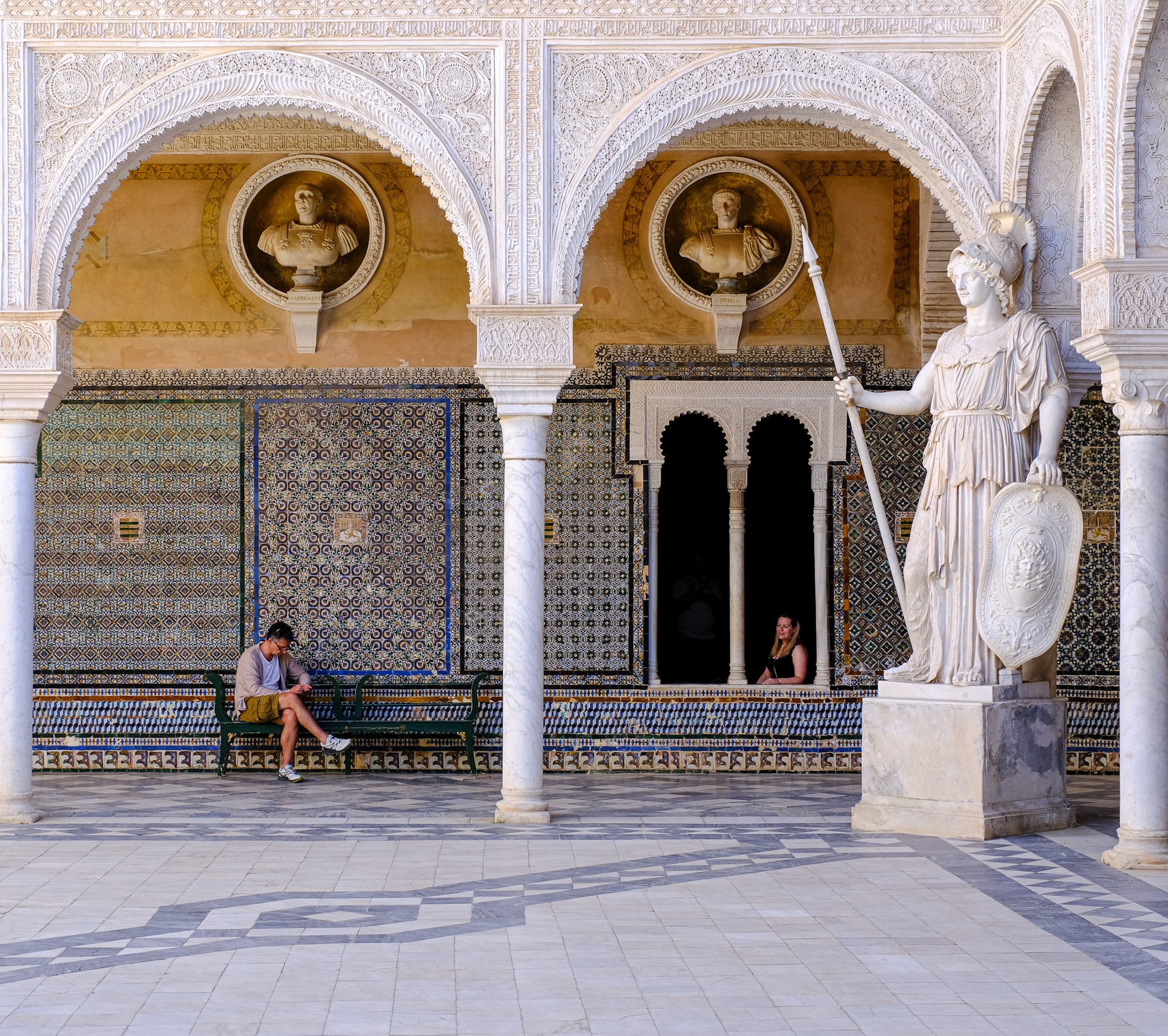
Thousands of ornaments, intricate designs, sculptures that seem too precise to be handmade — everything here feels carefully built, piece by piece.
Easily one of my favorite places in Seville.
What to Skip (or Not Prioritize)
Metropol Parasol
It’s an interesting structure, no doubt about that.
But for me, it felt a bit out of place.
The price felt a bit too high for what it offers, and somehow it didn’t really connect with the rest of Seville.
OK if you have extra time. Not something I would prioritize.
Triana
If you only have one or two days in Seville, I would skip this.
I know most guides will tell you that you must go, that it’s authentic and different, but the most important thing to understand is that you can’t see everything in such a short time.
Distances start to matter more than you think.
Trying to include Triana and then coming back to the old town can easily take time away from the parts of Seville that really define the city.
If you stay longer, sure — it’s worth exploring. But if you don’t, I would keep your time for the old town.
How I Would Plan 2 Days in Seville
Day 1
• Real Alcázar of Seville
• Seville Cathedral + La Giralda
• Barrio de Santa Cruz
• Sunset at Plaza de España
Day 2
• Casa de Pilatos
• Iglesia del Salvador
• Walk without a plan
• Sit somewhere and just enjoy the city
And if you prefer starting your trip with a broader overview of the city before exploring on your own, a small-group walking tour can actually help connect the major areas much easier during your first day.
Quick Reference — Top Sights
• Real Alcázar — Moorish palace, UNESCO listed, book tickets in advance
• Seville Cathedral & La Giralda — largest Gothic cathedral in the world
• Plaza de España — unmissable, especially at golden hour
• Barrio Santa Cruz — the old Jewish quarter, best explored on foot
• Metropol Parasol (Las Setas) – modern landmark, rooftop views over the city
• Triana neighborhood — flamenco roots, ceramic shops, local market
• Flamenco shows – book in advance, several venues in the centre
If you want to experience flamenco during your stay in Seville, especially if this is your first time in Andalusia, booking in advance is usually the safer option.
You can see one flamenco show option here.
If visiting during Semana Santa, plan everything around the procession routes. Outside those routes, the city stays surprisingly breathable — but book accommodation and Alcázar tickets months in advance.
SWAP RULE: Seville ↔ Málaga — useful depending on flight arrival point
Final Thoughts on Seville
Will you see everything? Probably not.
But that would be the case even if you stayed a week. Or a month.
Every day there’s a new guide, a new must-see place, a new restaurant, a new terrace with a great view. You can spend your whole trip chasing those and still feel like you’ve missed something.
My style is different.
Every country is unique, and that uniqueness doesn’t come only from the places you visit, but from everything around them — the people, the streets, the small moments, the details you don’t plan for.
Sometimes it’s a door, a window, a house that just feels right to you.
Maybe my list is not the most spectacular. Maybe you expected recommendations for rooftops, hidden courtyards or specific tours. That’s just not how I travel.
Each trip is yours. So see the essentials, take what matters, and then leave space to discover the place on your own. That’s where the real experience begins.
STOP 02 — CÓRDOBA
The Easiest Big City in Andalusia
Córdoba feels different from the other big cities in Andalusia.
Smaller. Easier. Less exhausting.
With Seville, I constantly felt like I had to prioritize things, decide what mattered and what didn’t. Córdoba never gave me that feeling.
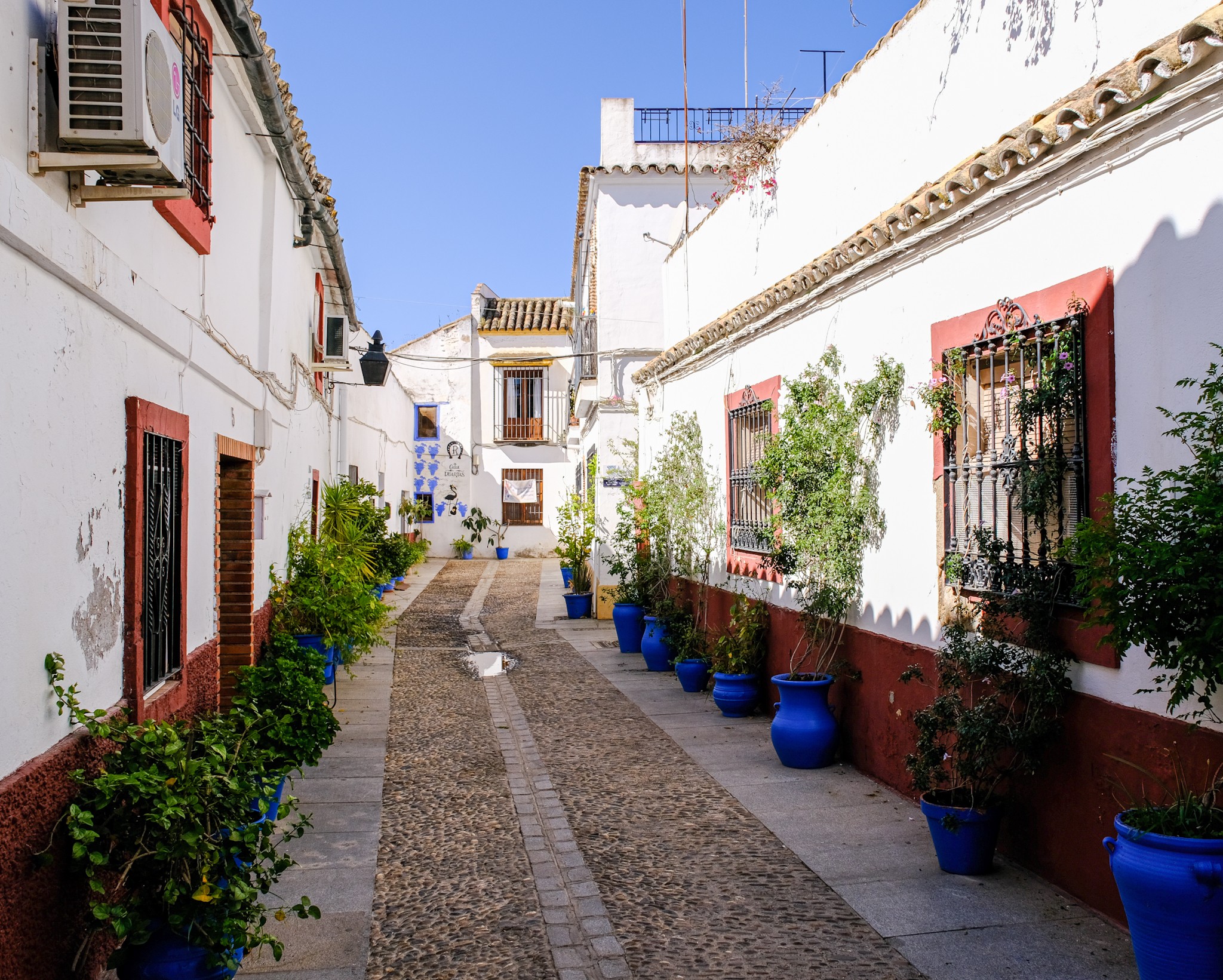
Most of the places people recommend here are worth seeing and the good part is that everything connects naturally through the old town. You walk from one place to another without thinking too much about it.
That’s probably why I enjoyed Córdoba so much both times I visited.
The city feels calmer. Less pressure. Less rushing around.
What I Would Not Skip
Mezquita-Catedral
If I had to pick one place in Córdoba, it would be this.
Not because it’s huge or famous, but because the building feels strange in the best possible way. The more you look around, the more details you notice.
I’ve seen it twice already and I still think it’s one of the most impressive places in Andalusia.
For me, this is the center of Córdoba.
Like many major sights in Andalusia, the Mezquita can become extremely busy, so if you already know your dates, booking in advance is worth considering.
You can check the Mosque-Cathedral ticket here.
Alcázar de los Reyes Cristianos
The Alcázar is worth it too.
The gardens alone are enough reason to go, especially when everything is green and warm outside.
What many people skip is the evening light and music show. If you have the chance, go. The whole place feels completely different after dark.
For me, Mezquita and the Alcázar work together. Seeing only one of them feels incomplete.
What Else I Would Do
Roman Bridge
The Roman Bridge is one of those places that naturally fits into the day.
Later in the afternoon, when the heat drops a bit, the walk here becomes pleasant. You can also climb the tower at the far end for a nice view over the city.
Not essential like Mezquita, but part of the Córdoba experience.
Patios and Flower Courtyards
One of the nicest things in Córdoba has nothing to do with giant monuments.
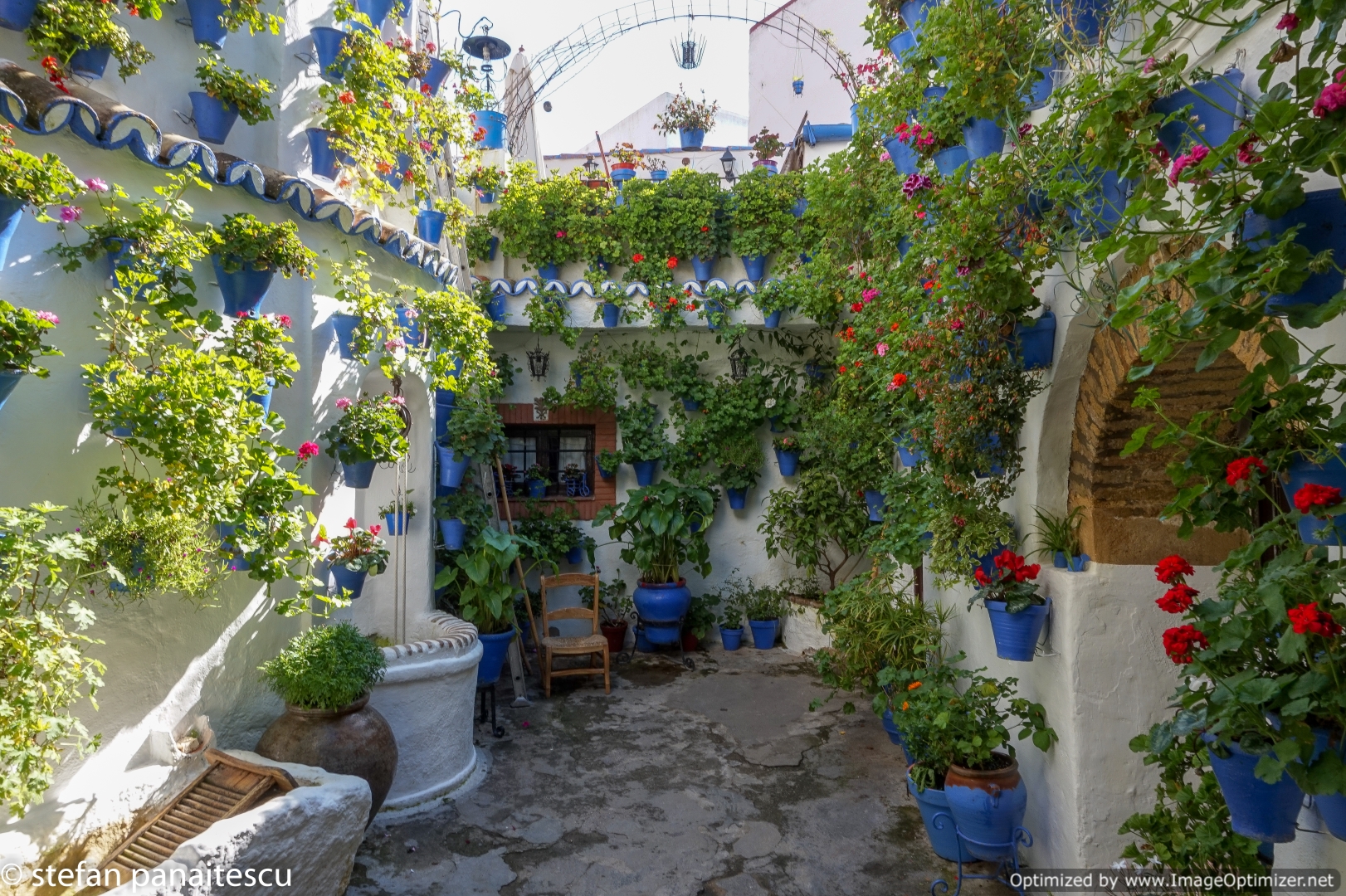
Just walk through the old streets and enter some of the patios.
The tickets are cheap and completely worth it.
These small courtyards full of flowers change the feeling of the city completely. Quiet walls, colors everywhere, little corners hidden behind simple doors.
Honestly, places like these stayed with me as much as the major landmarks.
If you prefer a more organized visit focused specifically on the patios, there are also dedicated tours built around them.
How I Would Spend My Time
Day 1
• Mezquita-Catedral
• Roman Bridge
• Alcázar
• Slow walk through the old town
Day 2
• Patios and courtyards
• Smaller streets around the center
• Long lunch somewhere near the Mezquita
• Evening Alcázar show
And if you only have limited time in Córdoba, combining the Jewish Quarter, Mezquita and Alcázar into a single guided route can simplify logistics quite a lot.
You can see one combined option here.
Honest Note About Time in Córdoba
A lot of guides will tell you to spend a week in Córdoba.
You can, obviously.
But realistically, one full day is enough for most people.
The city’s biggest advantage is how easy it is. The main sights are close together and you’re not constantly climbing hills or walking huge distances.
Everything flows naturally.
And once you’ve seen Mezquita and the Alcázar, the city becomes very relaxed.
That’s when Córdoba works best.
You slow down, wander through the old streets, sit somewhere for a drink, cross the Roman Bridge in the evening light and stop thinking about schedules.
Both times I visited, the city felt surprisingly light and easy.
Quick Reference — Top Sights
• Mezquita-Catedral — the single most extraordinary building in Andalusia, book ahead
• Alcázar de los Reyes Cristianos — gardens and fortress; the night light show is worth staying for
• Judería — the old Jewish quarter, narrow streets and hidden patios
• Calleja de las Flores — the most photographed street in Córdoba
• Patios de Córdoba — if visiting in May, the famous flower patio festival
• Medina Azahara — ruined Moorish city just outside town, worth the detour
One night in Córdoba changes the experience significantly. Most people do it as a day stop — which works — but the evening atmosphere is something else entirely.
SWAP RULE: Córdoba ↔ Granada (rare) — if you want Alhambra as final emotional peak
STOP 03 — GRANADA
WHAT I WOULD NOT SKIP
The Alhambra Complex
And yes, I know you are probably tired of hearing this already, but the Alhambra complex is absolutely the number one thing to see in Granada.
The Nasrid Palaces, the Generalife gardens, the fortress, the Palace of Charles V — together they create one of the most impressive places not only in Andalusia, but probably in all of Spain.
I will repeat this once again because it is extremely important:
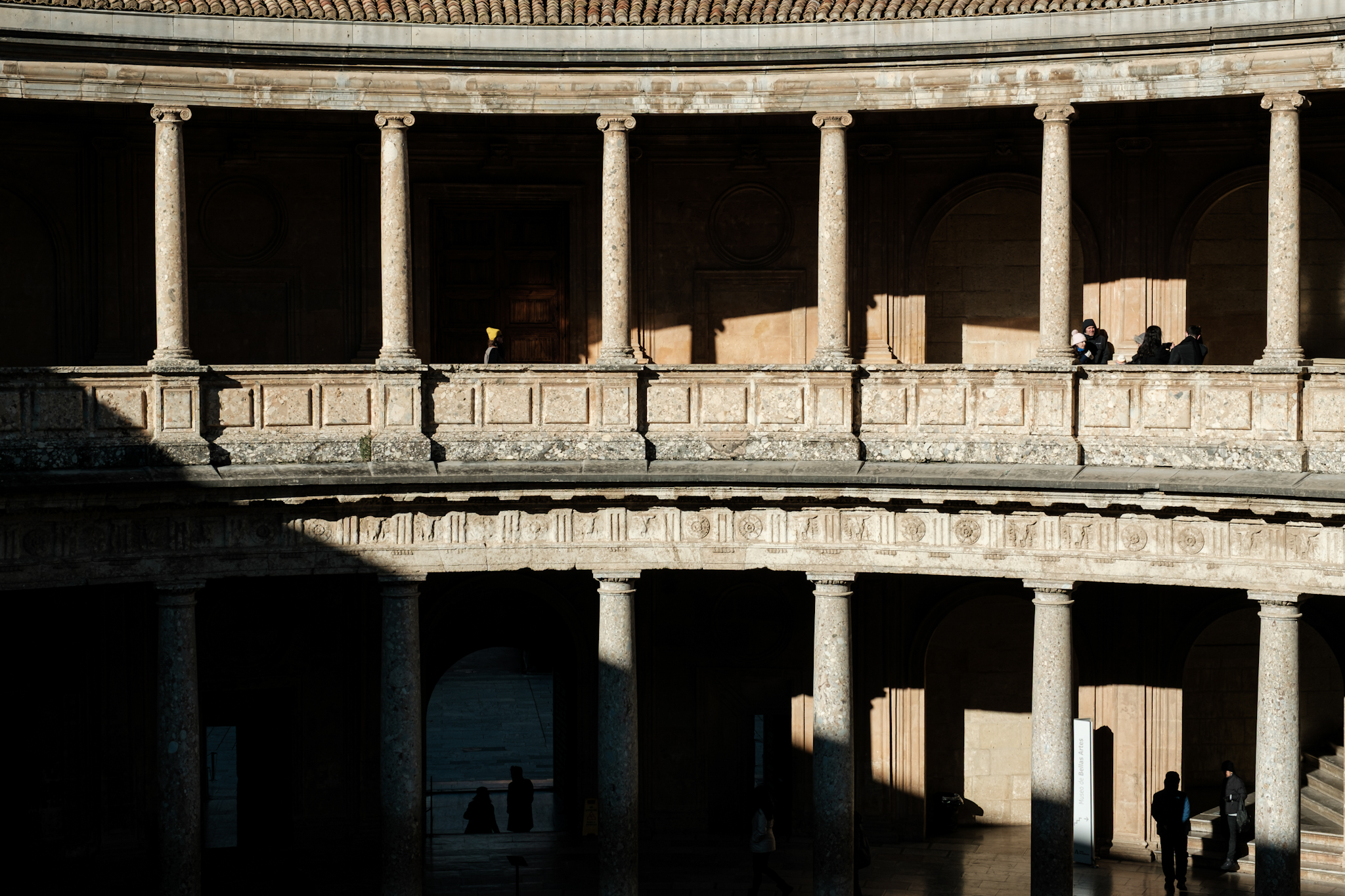
visiting the Alhambra requires more planning than almost any other major sight in Andalusia.
Tickets sell out months in advance, especially for the Nasrid Palaces, which are by far the most requested part of the complex.
And this is exactly why I strongly recommend checking ticket availability as early as possible.
You can check Alhambra tickets with Nasrid Palace access here.
You also need to pay attention to the exact type of ticket you buy because not all tickets include access to every area.
Make sure your ticket includes:
• the Nasrid Palaces
• the Generalife gardens
• the fortress areas of the complex
Once you solve this part and secure your tickets, you can relax and enjoy the rest of your time in Granada.
And honestly, that matters because the Alhambra can create a lot of stress for people who leave everything until the last minute.
How Much Time You Need
The visit itself is also much longer than many people expect.
For me, even after already seeing the complex before, the visit still took around 3–4 hours at a comfortable pace.
And I would absolutely recommend not rushing it.
This is not a place where you simply walk through rooms and leave.
The atmosphere, the details, the gardens, the changing views over Granada and Sierra Nevada — all of these deserve time.
The Night Visit
Another thing worth mentioning is the night visit to the Nasrid Palaces.
At least in 2018, this option existed and I managed to experience it.
And honestly, it was one of the most interesting experiences I had in Andalusia.
Seeing the Nasrid Palaces at night completely changes the atmosphere of the place.
The lighting, the silence, the shadows, the smaller number of people — everything feels more intimate and mysterious.
For people who prefer having the historical context explained properly instead of reading everything on signs, guided visits inside the Alhambra complex can work extremely well.
You can check one guided Alhambra tour here.
When I returned in 2026, we only did the daytime visit and it was still absolutely worth it, even after already seeing the complex once before.
That alone says a lot about how impressive this place actually is.
Granada Cathedral + Royal Chapel
If I had to choose the second most important place to visit in Granada after the Alhambra, it would definitely be the Cathedral.
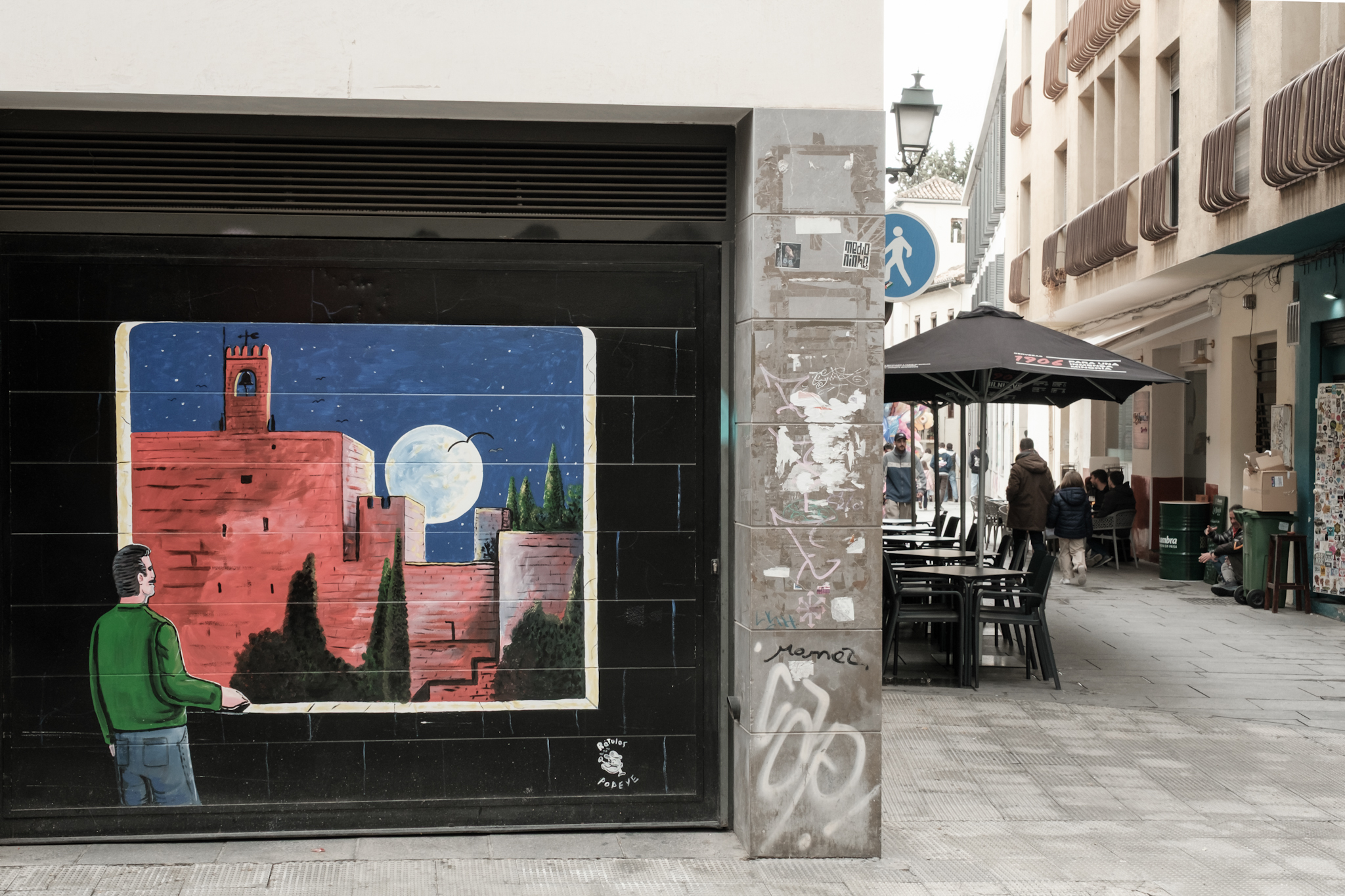
Maybe it is not as overwhelming in scale as the one in Seville, but I found it absolutely fascinating.
It is one of the places I enjoyed the most in Granada and one that stayed with me long after the visit ended.
And attached directly to it is the Royal Chapel of Granada — Capilla Real de Granada — another place that absolutely deserves your time.
The Royal Chapel houses the tombs of the Catholic Monarchs, Ferdinand and Isabella, making it one of the most historically important places in the city.
What I liked most is how naturally these two places fit together.
You don’t need to cross the city, reorganize your day or overthink logistics.
You simply continue the experience from one monument into the other and together they create one of the strongest historical and architectural combinations in Andalusia.
For me, this is easily the second essential stop in Granada after the Alhambra.
Albaicín + Sacromonte
These were probably my favorite parts of Granada outside the Alhambra.
Usually I don’t like strict routes inside cities. I prefer walking around without much planning.
Granada is one of the few exceptions.
Because Albaicín is steep. Really steep.
Beautiful, yes. White houses, narrow streets, random viewpoints appearing between walls, hidden staircases everywhere. But after a while you feel it in your legs.
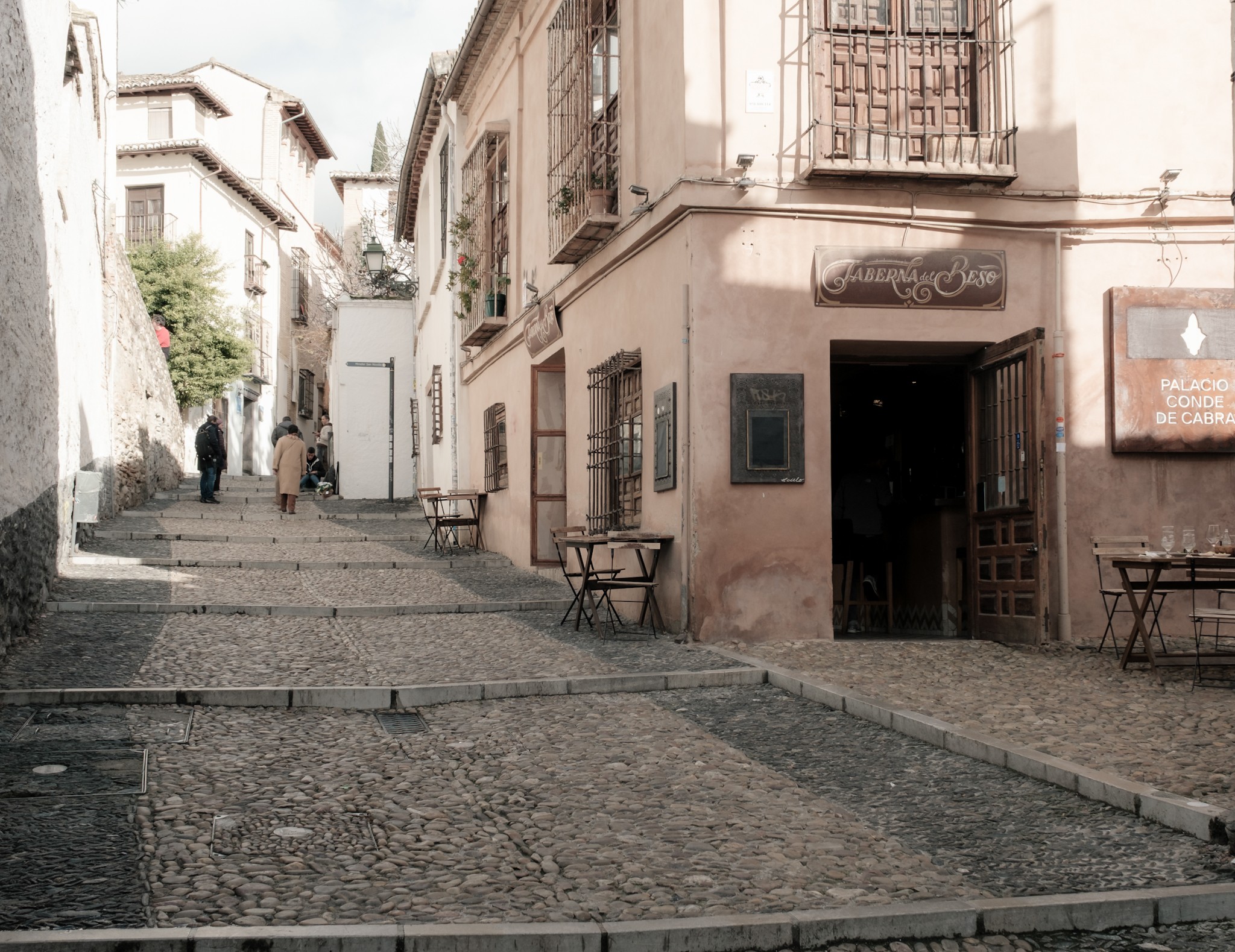
So it helps to have at least a rough idea of how Albaicín connects with Sacromonte.
Not because you need to follow a perfect route, but because otherwise you end up climbing the same streets repeatedly.
And Sacromonte is worth it.
And if you prefer understanding how Albaicín and Sacromonte connect historically and culturally instead of wandering randomly, guided walking tours can actually make a lot of sense here.
You can check one walking tour here.
The caves, the houses built into the rock, the atmosphere there feels completely different from the rest of Granada.
At the same time, don’t obsess over maps either.
Part of Albaicín works precisely because you get lost a little. You turn randomly on a street and suddenly find a tiny square, a staircase or a view opening toward Granada below.
And yes, Mirador de San Nicolás is touristy. Still worth it.
The view over the Alhambra with Sierra Nevada behind it really is beautiful.
The last time we visited Granada, after leaving the Alhambra, we slowly descended toward the road separating Albaicín from Sacromonte.
From there we climbed first toward the Sacromonte cave area, visited the caves and museums, then gradually descended through Albaicín back toward the center.
Honestly, this worked perfectly.
Instead of constantly climbing and descending randomly, everything felt connected and much less tiring.
And while descending back toward the center, one of the nicest things you can do is continue toward Carrera del Darro.
This is probably my favorite street in Granada.
Narrow streets beside the river, old buildings, small bridges, cafés, views toward the Alhambra above.
Especially in the evening, once the light softens and the crowds thin out, the whole area becomes incredibly pleasant.
For me, this entire sequence — Alhambra, Sacromonte, Albaicín and Carrera del Darro — is Granada at its best.
Important Note About Granada
If possible, don’t do Granada in one day.
You can. But it becomes exhausting.
Granada is much more physical than Seville, Córdoba or Málaga.
You climb constantly — toward Albaicín, toward Sacromonte, toward the Alhambra.
Of course, you can make things easier with taxis or buses and honestly, for many people, that’s probably the smart choice.
But even then, Granada still means hours of walking on uneven streets and hills.
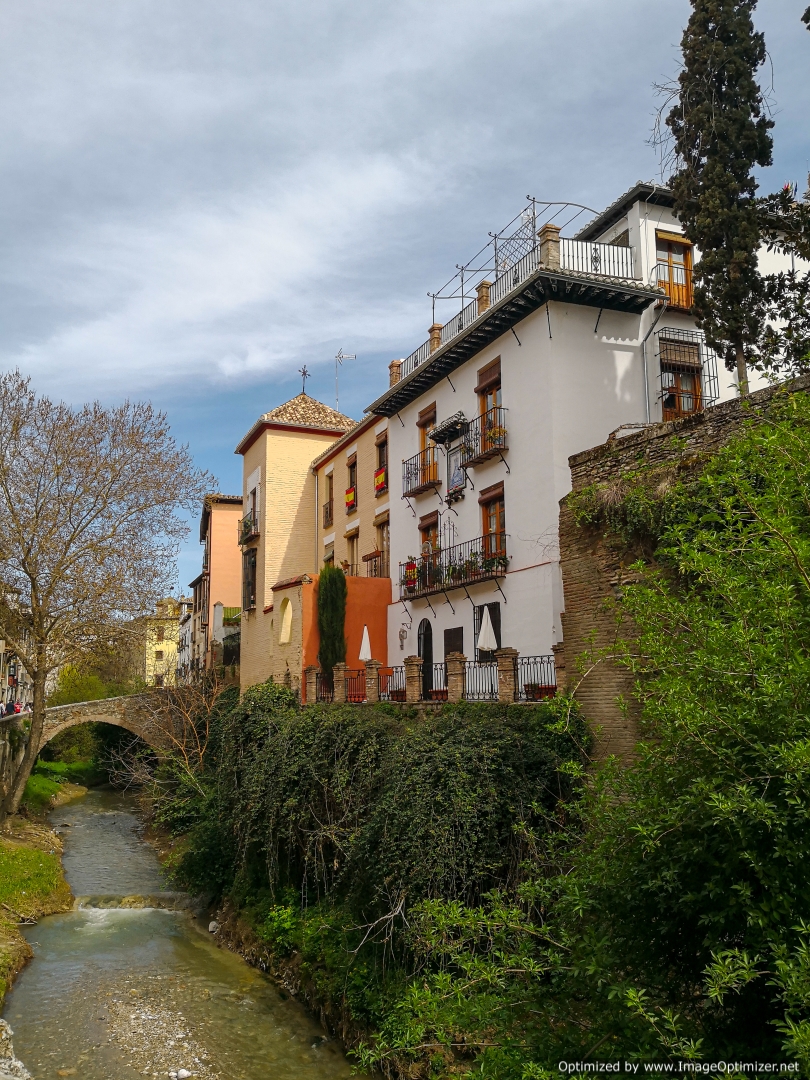
Walking through Granada
For me, two days should be the minimum whenever possible.
Granada is much better when you still have enough energy left to actually enjoy it.
Quick Reference — Top Sights
• Alhambra & Nasrid Palaces — book 4–6 weeks in advance minimum, non-negotiable. Seen it three times. Still impressive.
• Generalife Gardens — included with Alhambra ticket, allow extra time
• Albaicín — hilltop Moorish quarter, UNESCO listed, best at sunset when the sun lits the white streets and houses
• Sacromonte — cave district, flamenco shows in authentic settings
• Granada Cathedral & Royal Chapel — where Ferdinand and Isabella are buried
• Mirador de San Nicolás — one of the best views of the Alhambra, go at sunset if you have the opportunity
• Sierra Nevada — day trip by car if you have one; in winter, check road access restrictions before going
• Monastery of San Jeronimo – beautifully ornated church that is well worth the visit
And yes, if you want a flamenco experience in Granada, Sacromonte is probably the place where it feels most natural.
You can check one cave flamenco show here.
Granada is one of the few places that never feels like you’ve seen enough. Walking through Albaicín, climbing towards viewpoints, ending the day in Sacromonte — this is the kind of experience that stays with you.
SWAP RULE: Córdoba ↔ Granada — smoother if you want Alhambra as final peak
STOP 04 — MÁLAGA
The Most Modern Feeling City in Andalusia
Málaga feels very different from Seville, Córdoba or Granada.
More modern. Wider. Busier.
Bigger streets, more traffic, more shops, more international brands. It feels closer to a large Mediterranean city than to the older Andalusian towns.
And honestly, after Granada, I liked that contrast.
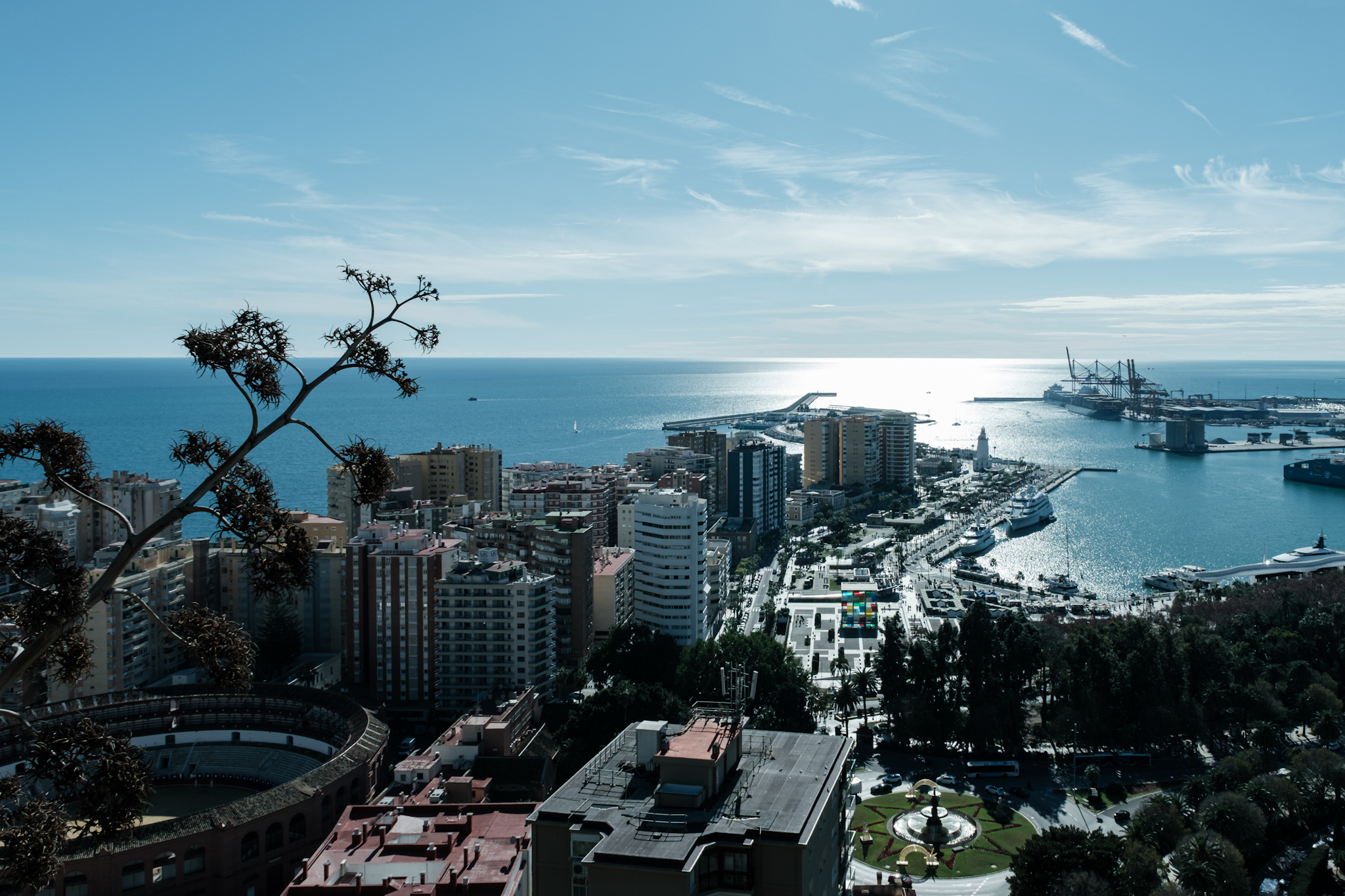
Málaga feels easier on the mind. Less intense.
Honestly, Málaga is also one of the places where I think slowing down and doing something outside the classic monument checklist works really well.
Things like cooking workshops can actually fit the city surprisingly well.
The city still has a historic center and enough atmosphere, but overall, it feels less focused on history and more balanced between beaches, shopping, restaurants and city life.
Physically, it’s also easier than Granada.
The only places where you really feel the climb are the Alcazaba and Castillo de Gibralfaro — and both are worth it because once you get higher, the views over the city and the coastline open beautifully.
What I liked most about Málaga was the rhythm.
In Seville or Granada, I constantly felt pulled toward monuments. In Málaga, I slowed down naturally.
Sitting at cafés, walking through the old streets, stopping near the port without feeling pressure to constantly move toward the next attraction.
And honestly, I think this is the best way to experience the city. Not aggressively. Not trying to turn it into another checklist.
What I Would Focus On
I’ll admit I’m biased because I’ve always liked Picasso, so yes, I think the Picasso Museum is worth visiting.
So yes, for me, the Picasso Museum is absolutely worth including during your time in Málaga.
You can check museum tickets here.
But overall, Málaga works better when you stop trying to see everything.
For me, the focus would be: Old Town, Picasso Museum, Málaga Cathedral, Alcazaba, and Castillo de Gibralfaro.
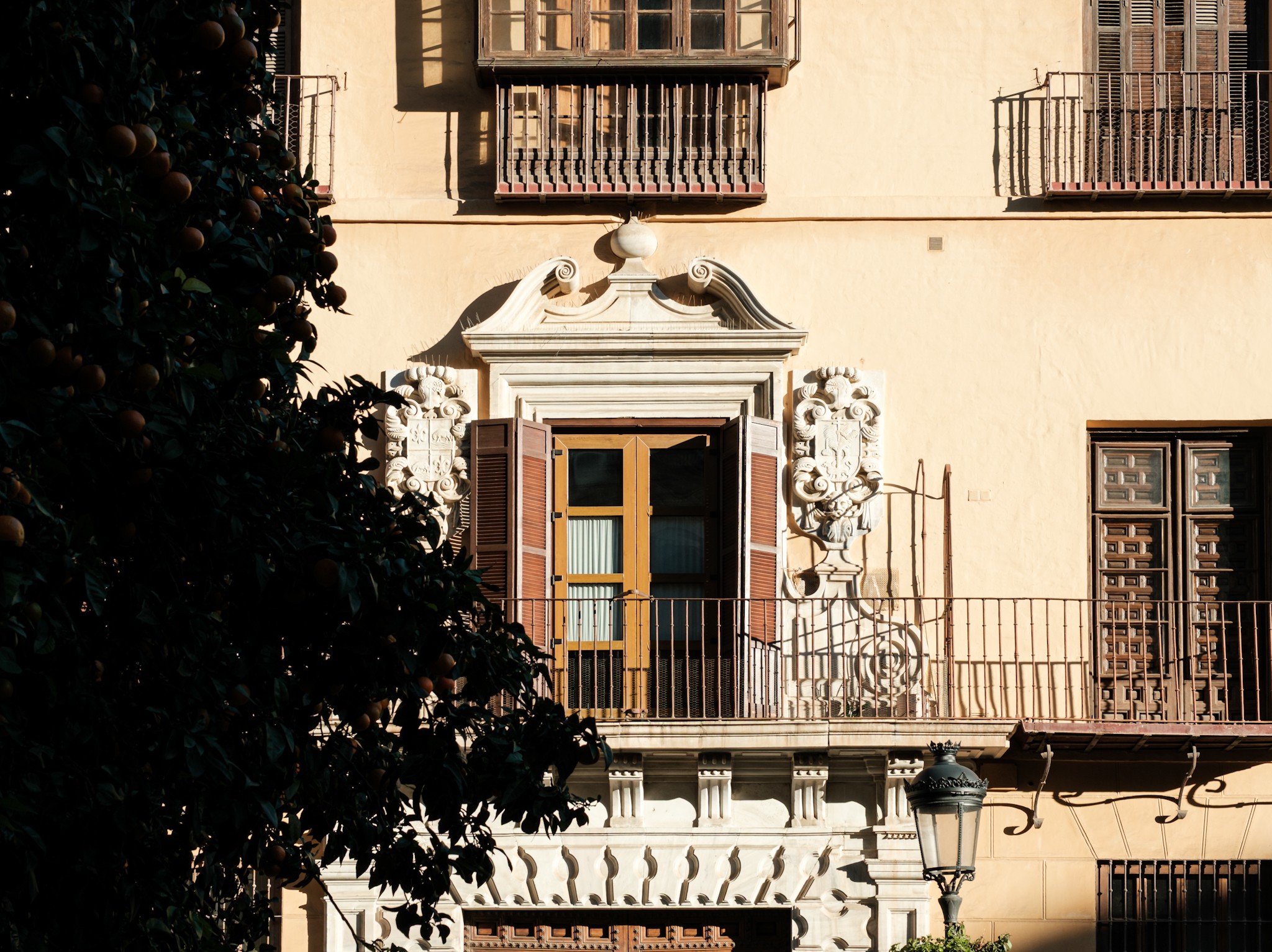
The old center is probably the strongest part of the city. Just walking around, entering random places, sitting somewhere for a drink, slowly moving through the streets without checking the map every five minutes.
That’s where Málaga works.
And once you feel rested enough, climb toward Alcazaba and Gibralfaro.
Yes, they require effort. But the views are worth it.
For one full day, honestly, I think this is enough.
Quick Reference — Top Sights
• Picasso Museum — buy a Málaga Pass; it’s the most reliable way to skip the sold-out problem
• Alcazaba — Moorish fortress above the city, free entry in the morning
• Málaga Cathedral (La Manquita) — the unfinished cathedral, climb the tower
• Centre Pompidou Málaga — best modern art collection in southern Spain
• Mercado Central de Atarazanas — the covered market, best for breakfast
• El Palo neighborhood — local fish restaurants away from tourist centre
• Caminito del Rey — book 6–8 weeks in advance; if individual tickets are gone, guided tours are available
And if individual tickets are already gone for your dates, guided excursions departing directly from Málaga are often the easiest solution.
Málaga works extremely well as a base for the coast. The city itself is very complete — history, culture, beaches, restaurants — even if it feels more polished and modern than somewhere like Seville or Cádiz.
SWAP RULE: Málaga ↔ Cádiz — urban energy ending vs slow Atlantic ending
STOP 05 — CÁDIZ
The Place I Would Feel More Than Plan
I love Cádiz.
And I think it’s one of the few places in Andalusia that works better when you stop trying to optimize everything.
Compared to Seville or Granada, Cádiz feels slower. More relaxed. More connected to the ocean.
Of course, there are still a few major places worth seeing:
• Cádiz Cathedral
• Torre Tavira
The cathedral is beautiful and the tower climb is worth it for the view alone.
And Torre Tavira helps you understand how surrounded by water Cádiz really is.
How I Would Actually Experience Cádiz
Beyond those places, I would mostly walk.
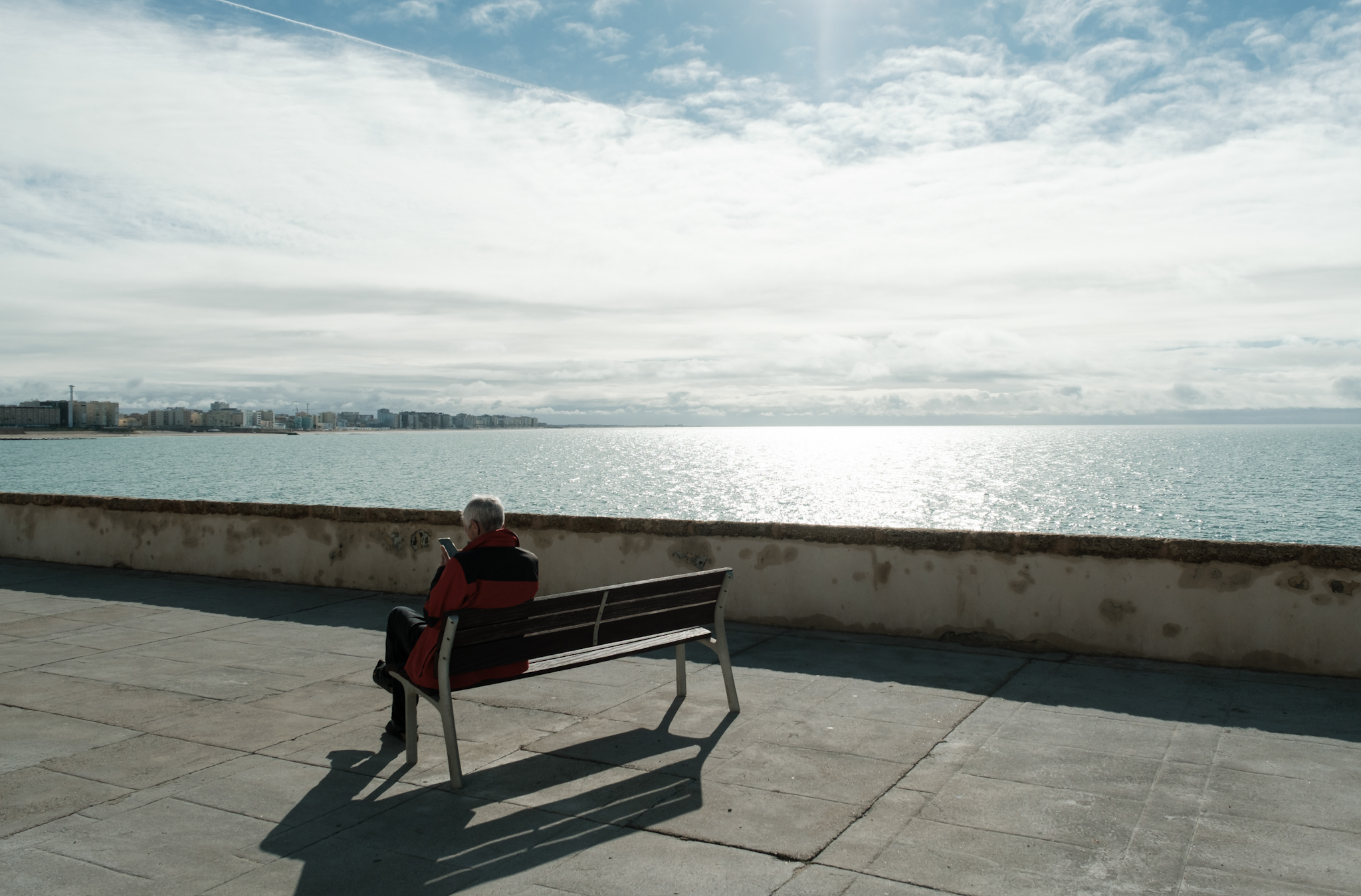
Walk beside the ocean. Walk along the beaches. Stop somewhere for a drink. Sit without checking the time.
If possible, circle the outer edge of Cádiz first, following the water around the city before slowly returning inside.
Because this is where Cádiz becomes special.
The ocean is constantly there. The walls, the beaches, the old buildings, the light changing during the day — all that matters more here than monuments.
And once you return inside the city, just wander.
Honestly, that’s the best thing you can do in Cádiz.
Of course there are other buildings worth seeing, smaller museums, gardens and historical places.
But Cádiz stayed with me because of the atmosphere, not because of landmarks.
That said, if you prefer having at least some structure during your first hours in Cádiz, smaller guided walking tours can help you understand the city much faster.
The city feels old in a different way compared to the rest of Andalusia.
Sometimes chaotic. Sometimes it is almost tropical.
And I understand why people compare it to Havana.
I haven’t been there myself, but Cádiz has that same feeling: faded colorful buildings, ocean everywhere, slower rhythm, streets that feel alive even when nothing major is happening.
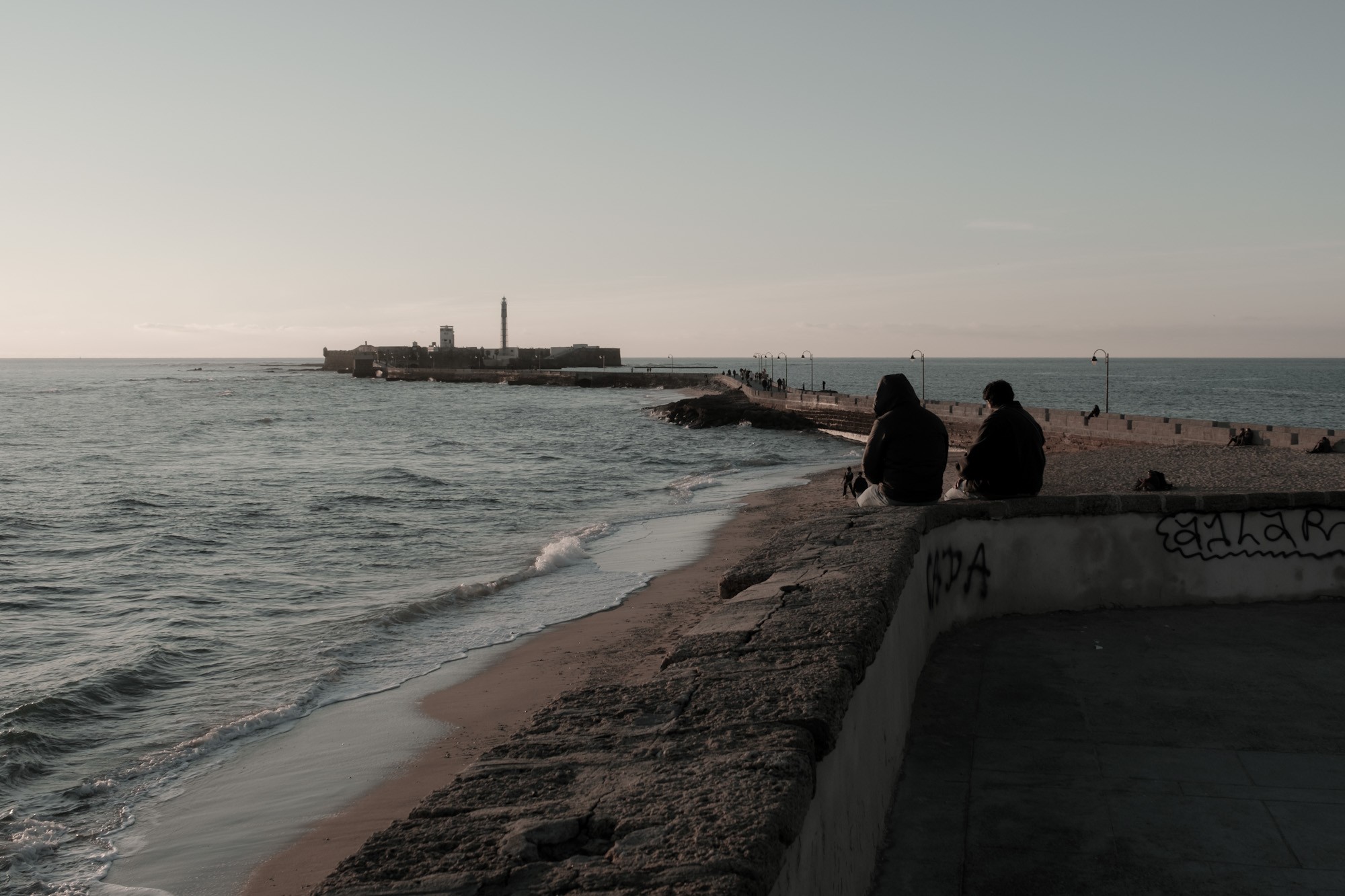
That’s what I love about it.
A Different Rhythm
Cádiz feels even better on Sundays.
Especially around the Central Market.
Inside you’ll find small food stalls, locals eating and drinking, noise everywhere, people simply living their day normally.
And honestly, this is the kind of place where you should slow down.
Eat there. Or do what we did: buy food and take it to the beach.
Simple, but somehow more memorable than many major attractions from other cities.
Because Cádiz feels lived in. Not polished for tourists.
Quick Reference — Top Sights
• Cádiz Cathedral — climb the tower for panoramic Atlantic views
• Torre Tavira — camera obscura and best rooftop in the city
• Mercado Central — Sunday market, one of the best food markets in Andalusia
• La Caleta Beach — small, historic, between two castles
• Barrio del Pópulo — oldest neighbourhood, Roman theatre ruins
• Playa de la Victoria — long Atlantic beach, walk south from the centre
• Day trip to Bolonia — Roman ruins + wild Atlantic dune, 45 min by car
• Day trip to Gibraltar — doable from here even if a bit longer of a trip but you can push it around depending on mood and weather.
And if Cádiz history interests you more deeply, there are also medieval-focused guided walks available through the old city.
Cádiz is the kind of place where you sit on a beach and forget about photography. Worn buildings, Atlantic light, time slowing down. It doesn’t try to impress you — and that’s exactly why it stays with you.
SWAP RULE: Málaga ↔ Cádiz — urban energy ending vs slow Atlantic ending
What’s next?
Now that we finished with the Big Five, the next two articles will expand a bit and guide you through a deeper kind of Andalusia, one that comes with the luxury of being able to travel for longer periods of time.
So, coming up next The Extended Route and The Coastal Reset Route.
Keep an eye out!
No Comments