


21 May Andalusia – ASITRAVEL Route System – Extended Route
After writing the first article about a itinerary idea in Andalusia I was sure that many people will ask: “Ok, but what about the other cities?”
How I see it, Andalusia is split into two types of places.
The first one is represented by the large, old historical cities — huge alcázars, massive cathedrals, cities that passed from one rule to another, places shaped by the Moors, museums, monuments, layers upon layers of history.
And then there is the second Andalusia.
The more relaxed Andalusia.
The one that gives you the chance to catch your breath after finishing that intense route through the five major cities.
Of course, every city or town will still have its own point of interest.
For example, it would be a shame to visit Ronda without seeing the bridge. But it would also be a shame to visit Ronda without crossing that bridge and getting lost in that suspended part of the town.
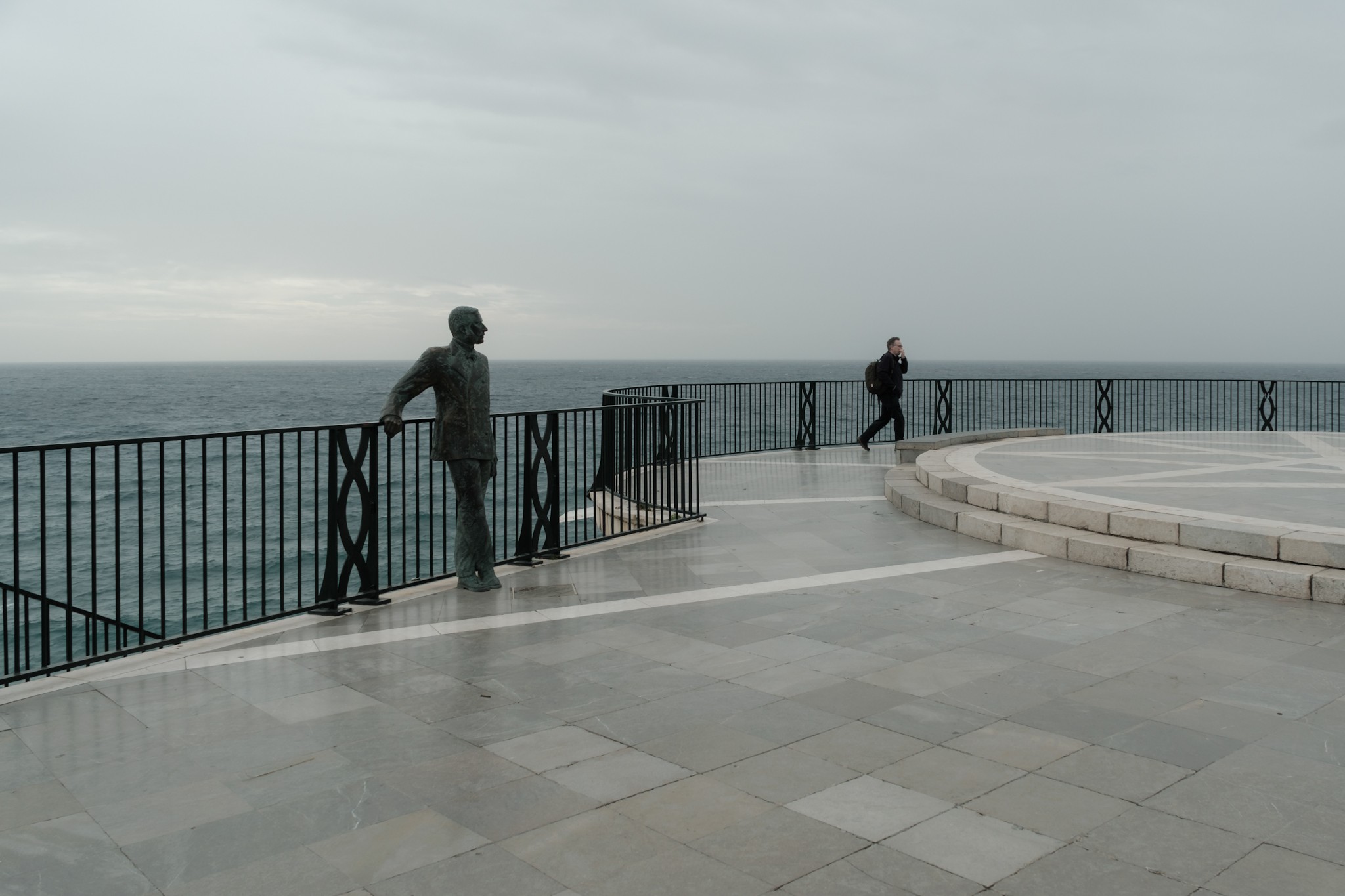
It would be a shame to visit Nerja without seeing Balcón de Europa.
It would be a shame to visit Tarifa without slowing down, relaxing, looking toward Africa and simply watching the ocean.
And I think this is the point I’m trying to make now.
After seeing history, culture and tradition in those major cities, you can slowly move toward these smaller places which are also filled with history, culture and tradition, but which move at a much more relaxed rhythm.
You allow yourself to walk freely. You allow yourself to stop anywhere. To grab something to eat, a drink or something sweet and simply sit there for an hour without doing anything. Without the pressure that you still need to check another attraction afterward.
And honestly, I think this is where the real charm of Andalusia begins.
After you move away from: “wow, look what they built here” and “wow, look how much history this place has” toward: “wow, look how people actually live here.”
How time moves. How shops slowly close during the day. How everything pauses. How you can sit somewhere reading, walking or simply doing nothing without constantly worrying about the next city, the next sight or the next thing you still must check off your list.
The routes below are ideas. Starting points. Maybe they are what I would personally do after spending more than 40 days in Andalusia across three different trips.
And honestly, I think the most important thing is understanding from the beginning that it is impossible to see everything in one week. It is also impossible to return rested if you constantly run from one place to another.
What matters most is understanding what kind of traveler you actually are and what attracts you the most.
• Maybe you are the type of person who prefers staying at the beach.
• Maybe you prefer getting lost through small old streets.
• Maybe you prefer larger cities with shopping streets and bigger brands.
• Maybe you care more about monuments, history and cathedrals.
Only you can really know that.
I believe the routes above are a good starting point for planning a trip through Andalusia and the places I focused on are simply the ones that mattered the most to me personally.
Of course, after visiting these cities yourself, you might end up creating a completely different ranking from everything you read online.
ROUTE 2 — EXTENDED ROUTE
Seville → Córdoba → Granada → Nerja/Frigiliana → Málaga → Ronda/Setenil → Cádiz
10–12 days | medium intensity | full-spectrum experience
Route Logic
Core Big Five plus two additional layers:
• Coastal micro-layer: Nerja and Frigiliana
• Dramatic inland layer: Ronda and Setenil
All Big Five city sections above apply.
NERJA
Top Sights
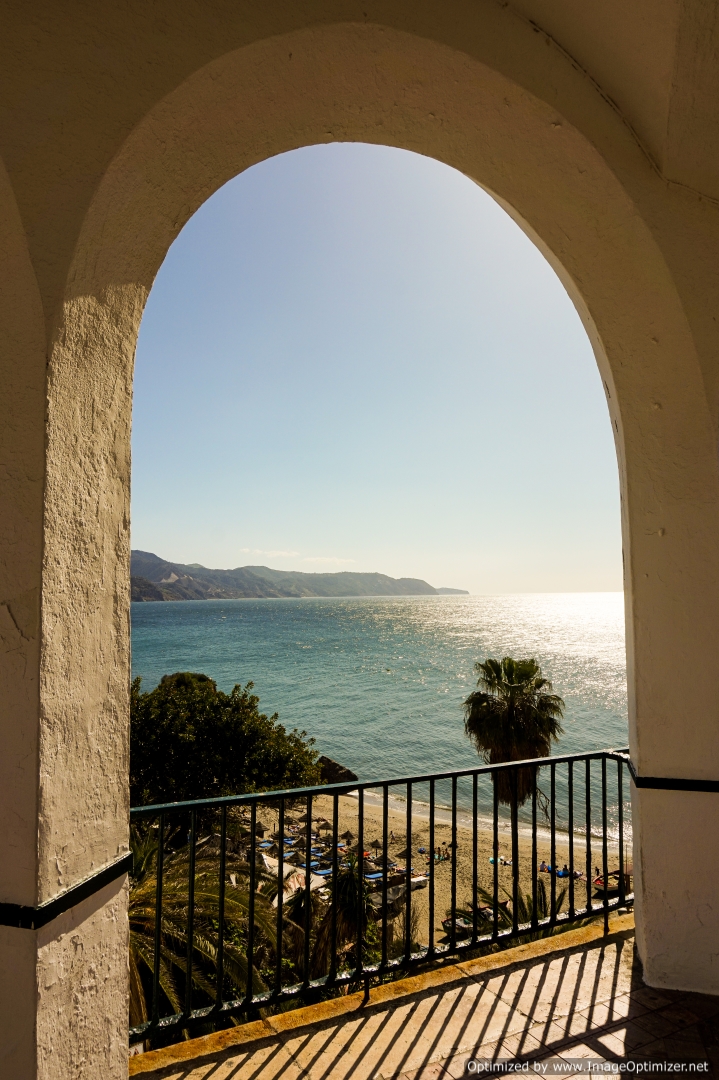
Balcón de Europa — the symbolic heart of Nerja and easily the most famous viewpoint in town. Built on the site of an old fortress destroyed during the Napoleonic wars, the terrace opens directly toward the Mediterranean and offers panoramic views over the coastline. It is almost always busy, especially around sunset, but the atmosphere is part of the experience. Street musicians, cafés and the sea breeze create one of the most pleasant evening walks in Andalusia. Despite the crowds, this remains one of the places that genuinely deserves the hype.
• Nerja Caves (Cuevas de Nerja) — one of the most impressive natural attractions in southern Spain. Discovered in 1959, the cave system stretches for several kilometres and contains enormous chambers, prehistoric paintings and massive stalactite formations. Some of the caverns feel almost cathedral-like because of their scale. The caves are located a short drive outside Nerja and are easy to combine with Frigiliana. Even people who normally skip caves often end up enjoying this visit because of how dramatic the interiors are.
If you don’t want to drive, you can simply book a direct entrance ticket for Nerja Caves here.
• Burriana Beach — probably the best beach in Nerja if you want a combination of accessibility, restaurants and atmosphere. Unlike some smaller coves in the area, Burriana feels lively without becoming overwhelming. The beach is surrounded by cafés, seafood restaurants and small shops, making it easy to spend half a day here. The walk down from the centre is steep in some places but manageable. During warmer months this becomes one of the social centres of the town.
• Trip to Frigiliana — located less than fifteen minutes from Nerja, this is one of the most beautiful white villages in Andalusia and one of the easiest day trips you can make. Narrow streets, whitewashed houses, flower pots and mountain views dominate the old town. Unlike some heavily touristic villages, Frigiliana still feels calm early in the morning or later in the evening. It works especially well combined with Nerja because the contrast between coast and mountains is immediate.
If you prefer organized day trips instead of driving, this Nerja, Frigiliana and Cave tour from Málaga is probably one of the easiest ways to experience the entire area in a single day.
• Trip to Almuñécar — often overlooked compared to Nerja or Málaga, but surprisingly interesting if you have extra time. The town combines beaches, an old Moorish castle, Roman history and a more local atmosphere than some Costa del Sol destinations. The long seafront promenade makes it pleasant for slower afternoons and sunset walks. While it may not be essential for a first Andalusia trip, it works very well as a secondary coastal stop if you are already based in Nerja.
• Old Town of Nerja — while smaller than the historic centres of Málaga, Córdoba or Cádiz, Nerja’s centre has a pleasant slower rhythm that works well for evenings. White buildings, narrow streets, tapas bars and sea viewpoints create a relaxed atmosphere that feels less urban than larger Andalusian cities. The area around Plaza de España and Balcón de Europa is especially lively at night.
• Málaga Day Trip — one of the strongest advantages of staying in Nerja is how easily Málaga can be reached. In around an hour you can access museums, restaurants, historic sites and one of the largest urban centres in Andalusia, then return in the evening to a calmer coastal town. This makes Nerja a particularly efficient operational base for travellers who want both beach atmosphere and city access.
Nerja works better as an operational base than as a standalone destination. It’s close to Málaga, a stone’s throw from Frigiliana, and within easy reach of Almuñécar. Stay here, slow down, and use it as a launch point for the area.
Another very good option for travelers staying around Málaga is this Nerja and Frigiliana tour with local tastings, especially if you prefer slower day trips without renting a car.
SWAP RULE: Nerja ↔ Ronda — coastal cliffs vs inland drama
FRIGILIANA
Top Sights
Upper Old Town — the true highlight of Frigiliana and the reason most people visit. The steep cobbled streets, whitewashed walls and terracotta flower pots create one of the most visually consistent villages in Andalusia. Almost every corner feels photogenic. Unlike larger towns, the experience here is less about major attractions and more about slowly wandering through the streets. Early morning or late afternoon completely changes the atmosphere and makes the village feel quieter and far more authentic.
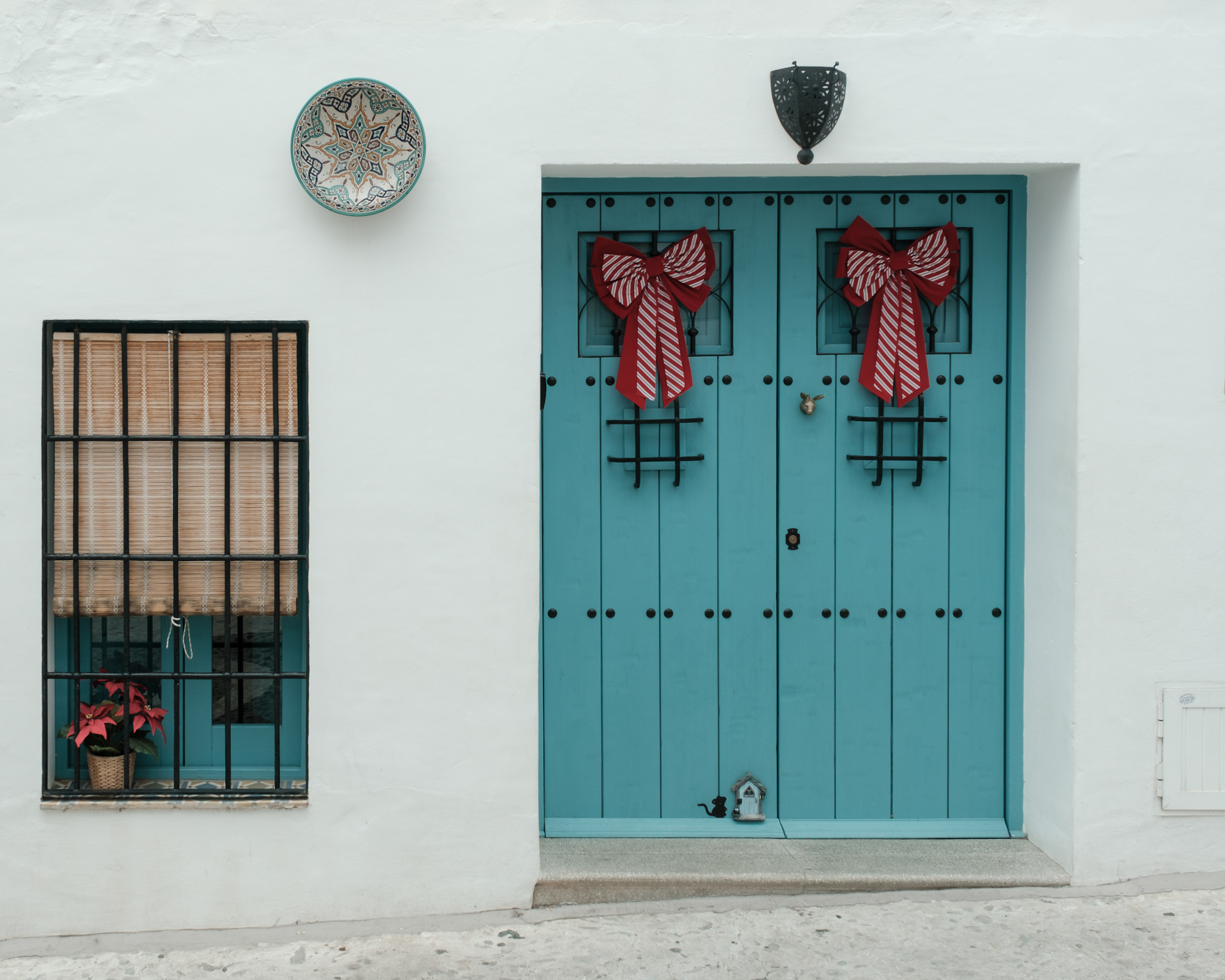
• Calle Real — the main artery crossing the historic centre and one of the best streets to explore on foot. Small shops, cafés and traditional houses line the route while side alleys constantly open toward staircases and hidden corners. Even during busier periods the street maintains a relaxed atmosphere compared to more commercialized white villages in southern Spain.
• Ceramic Tile Murals — one of the details that gives Frigiliana additional historical depth beyond its visual beauty. The murals scattered throughout the village depict scenes from the conflict between Christians and Moors and help explain part of the area’s complicated history. They are integrated directly into walls and staircases, meaning you discover them naturally while walking through the old town.
• Mirador de Frigiliana — one of the best viewpoints in the village, opening toward the surrounding hills and the Mediterranean coastline in the distance. On clear days the contrast between mountains, white houses and sea creates one of the classic Andalusian landscapes people imagine before arriving here. Sunset light works especially well in this area because the white buildings begin reflecting warmer tones.
• The Moorish Quarter — the oldest part of Frigiliana and the area where the village feels most traditional. Narrow passages, staircases and tightly packed houses still preserve much of the original structure influenced by Andalusia’s Islamic past. This section is also the most atmospheric part of the village if you simply want to slow down and wander without a strict plan
Despite becoming more popular, Frigiliana hasn’t lost its character. It’s still clean, well-maintained, and visually one of the most consistent white villages in Andalusia. If you arrive late, parking gets complicated — take a bus or taxi from Nerja. A good combination: half a day here, half a day in Almuñécar.
Frigiliana is a half-day or full-day trip from Nerja. No need to stay overnight unless you want complete silence.
SWAP RULE: Frigiliana ↔ Setenil — white village aesthetics vs geological drama
RONDA
Top Sights
• Puente Nuevo — the defining image of Ronda and one of the most spectacular landmarks in Andalusia. The massive stone bridge connects the two sides of the city while suspended above the El Tajo gorge. Almost every visitor ends up returning here multiple times during the day because the light constantly changes the atmosphere. Sunrise and sunset are especially dramatic. Even though Ronda has many attractions, this bridge remains the emotional centre of the city.
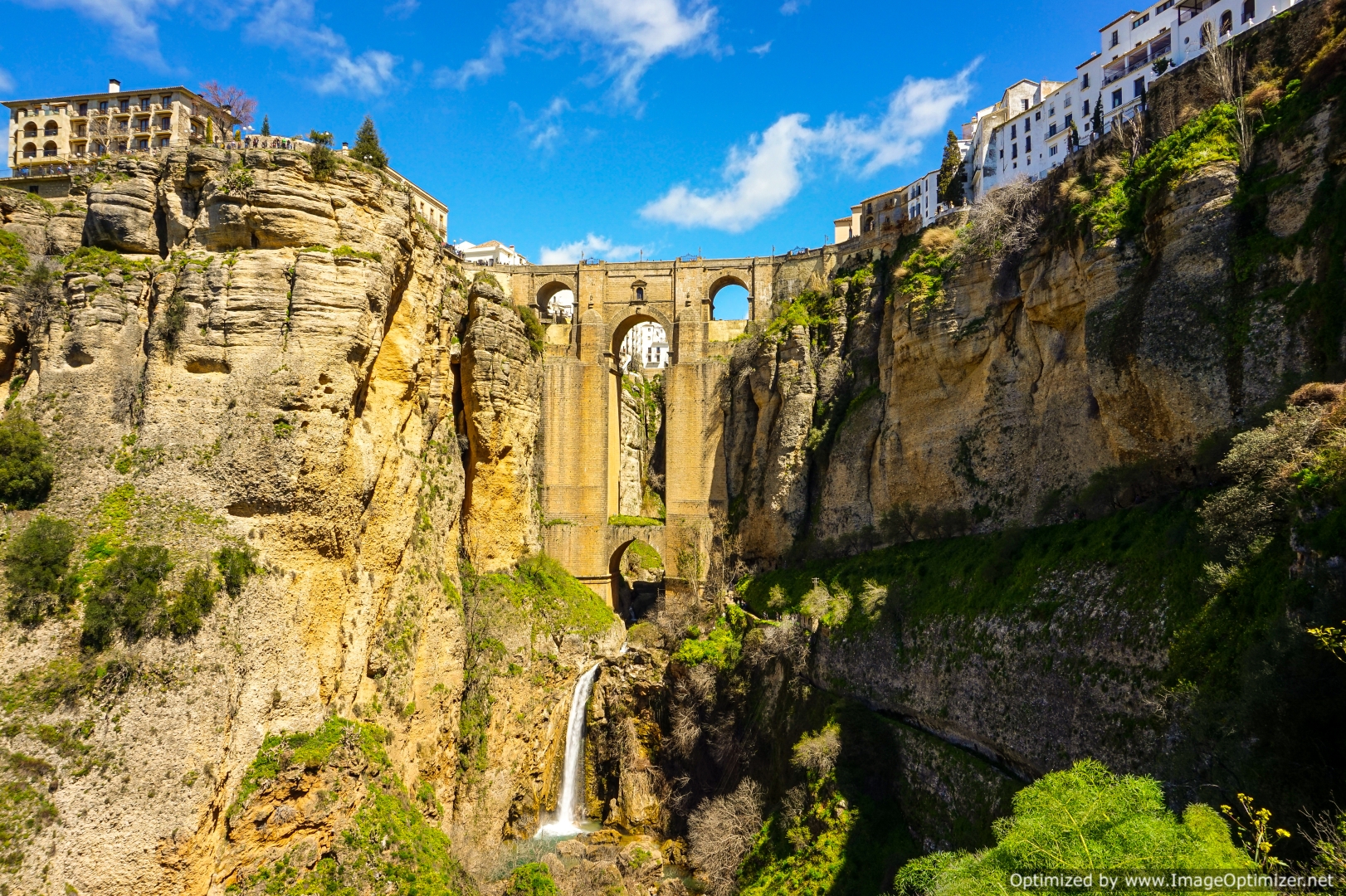
• El Tajo Gorge — the natural formation that gives Ronda its identity. Standing at the edge of the cliffs completely changes the scale of the city and explains why the place feels so visually unique. Walking the path below the bridge is highly recommended because it reveals the true height of the gorge and completely transforms the perspective. From below, the bridge feels monumental rather than simply scenic.
• Plaza de Toros — one of the oldest and most historically important bullrings in Spain. Even people with no interest in bullfighting often visit because of the architecture and historical significance. The museum inside explains the development of bullfighting traditions in Andalusia and the role Ronda played in shaping them. The arena itself is elegant and surprisingly atmospheric.
• Mondragón Palace — a former Moorish palace that offers one of the quieter experiences in Ronda. The building combines gardens, courtyards and terraces overlooking the gorge while also containing small historical exhibitions about the region. Compared to the bridge area, this part of the city feels calmer and more reflective, especially during the afternoon.
• Baños Árabes — among the best-preserved Arab baths in Spain and one of the most overlooked attractions in Ronda. Located slightly outside the busiest tourist zone, the baths reveal another layer of the city’s Islamic history. The preserved arches and water systems still give a strong sense of how the structure functioned centuries ago.
• Old Town Streets — one of the best aspects of Ronda is simply walking through the streets without a strict route. Small squares, stone buildings and sudden openings toward the gorge create constant visual surprises. Unlike some Andalusian cities where attractions are concentrated in one area, Ronda’s dramatic geography becomes part of the walking experience itself.
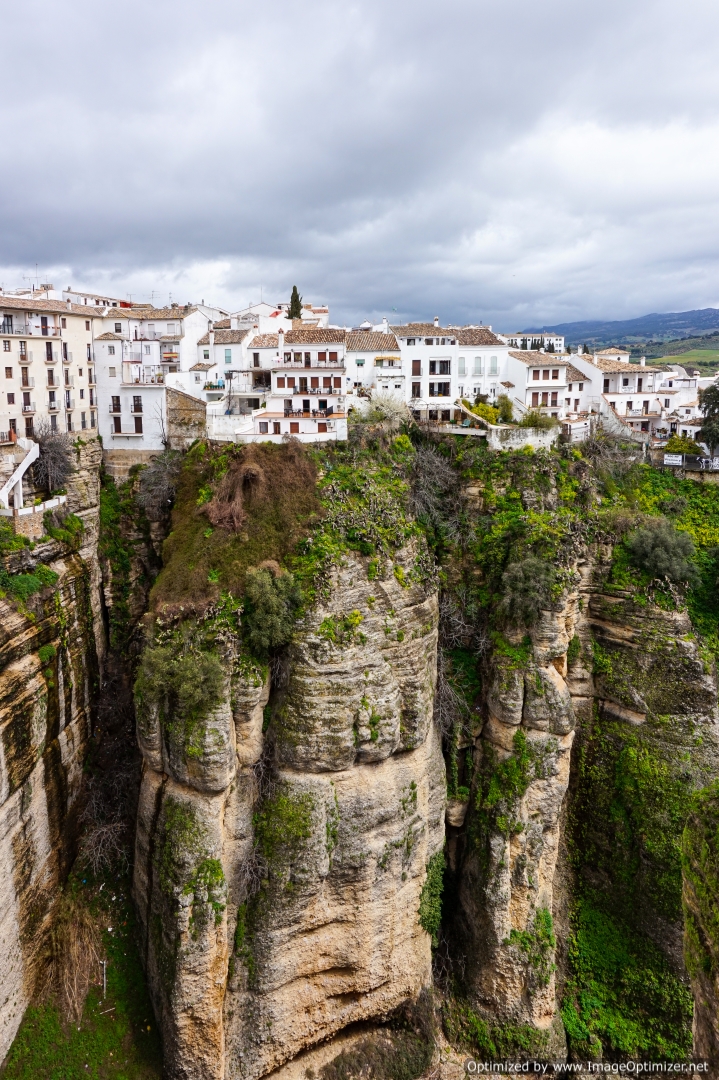
• Miradores Around the Gorge — several viewpoints surround the cliffs and each offers a different perspective over the bridge, valley and surrounding mountains. Some of the best views are not directly at Puente Nuevo itself but slightly further away, where the entire structure can be seen suspended between the cliffs. These viewpoints become especially impressive during golden hour.
• Trip to Setenil de las Bodegas — one of the easiest and most rewarding day trips from Ronda, located around twenty minutes away by car. The village is famous for houses built directly into the rock formations, creating one of the strangest urban landscapes in Spain. Combined, Ronda and Setenil form one of the strongest inland combinations in Andalusia.
If you are based in Seville and don’t want to drive through the mountains, this White Villages and Ronda day trip from Seville is one of the easiest ways to experience inland Andalusia.
Travelers staying in Málaga can instead choose between this guided Ronda and Setenil day trip, this alternative full-day option or this version with more free time in Ronda.
Ronda is not just about the bridge. The whole city sits on top of a massive rock formation — houses at the edge of a gorge, streets that open into sudden views. That sense of suspension is what makes it worth returning to.
If you want more historical context while visiting the city, you can also book a guided walking tour of Ronda.
SWAP RULE: Nerja ↔ Ronda — choose coast or inland drama first
SETENIL DE LAS BODEGAS
Top Sights
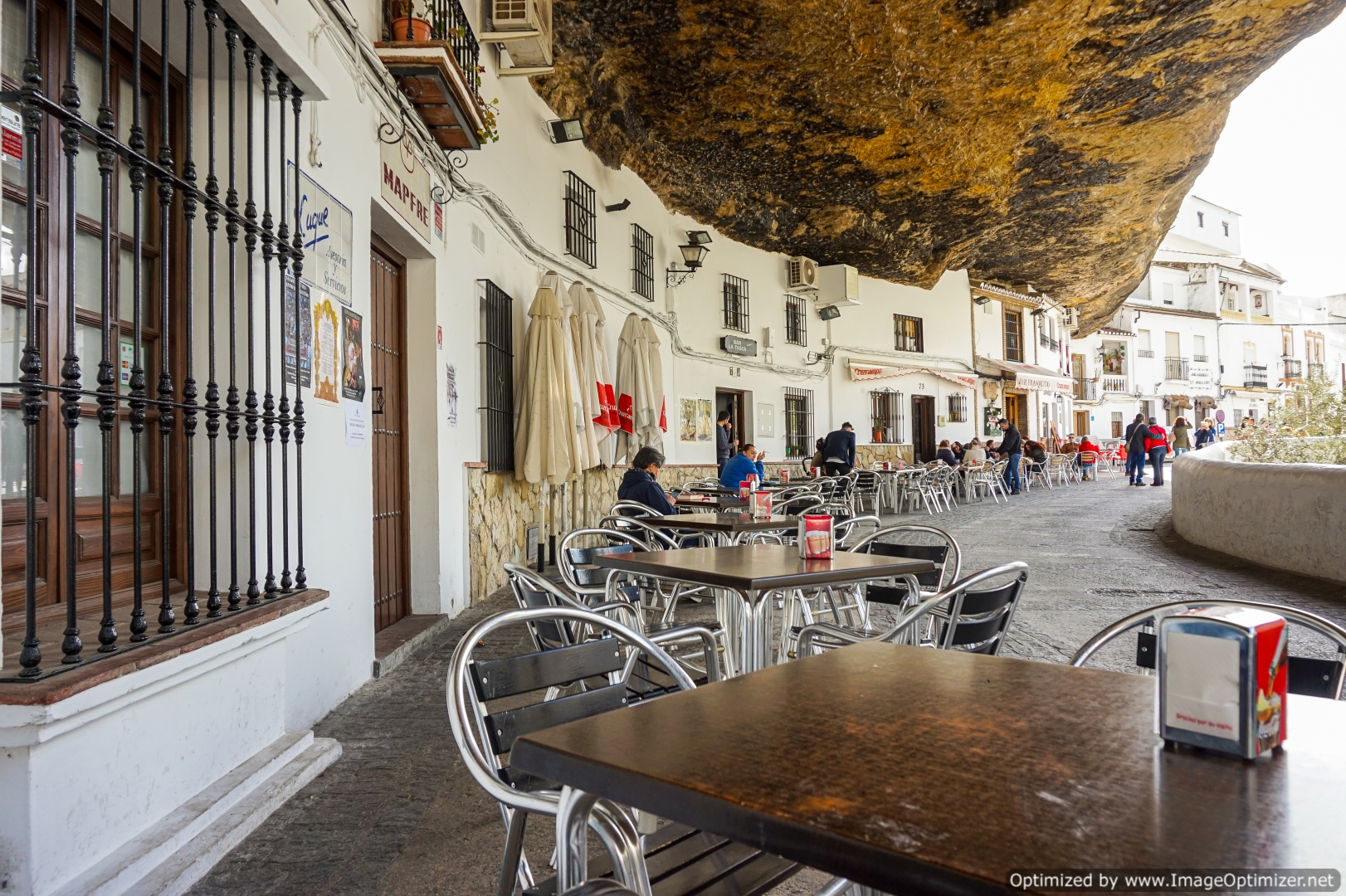
• Calle Cuevas del Sol — the most famous street in Setenil and one of the most unusual urban spaces in Andalusia. Houses, cafés and restaurants sit directly beneath enormous overhanging rock formations that almost completely cover the street. The scale of the rock above the buildings feels surreal when seen in person. This is the image most people associate with Setenil and the main reason the village became internationally known.
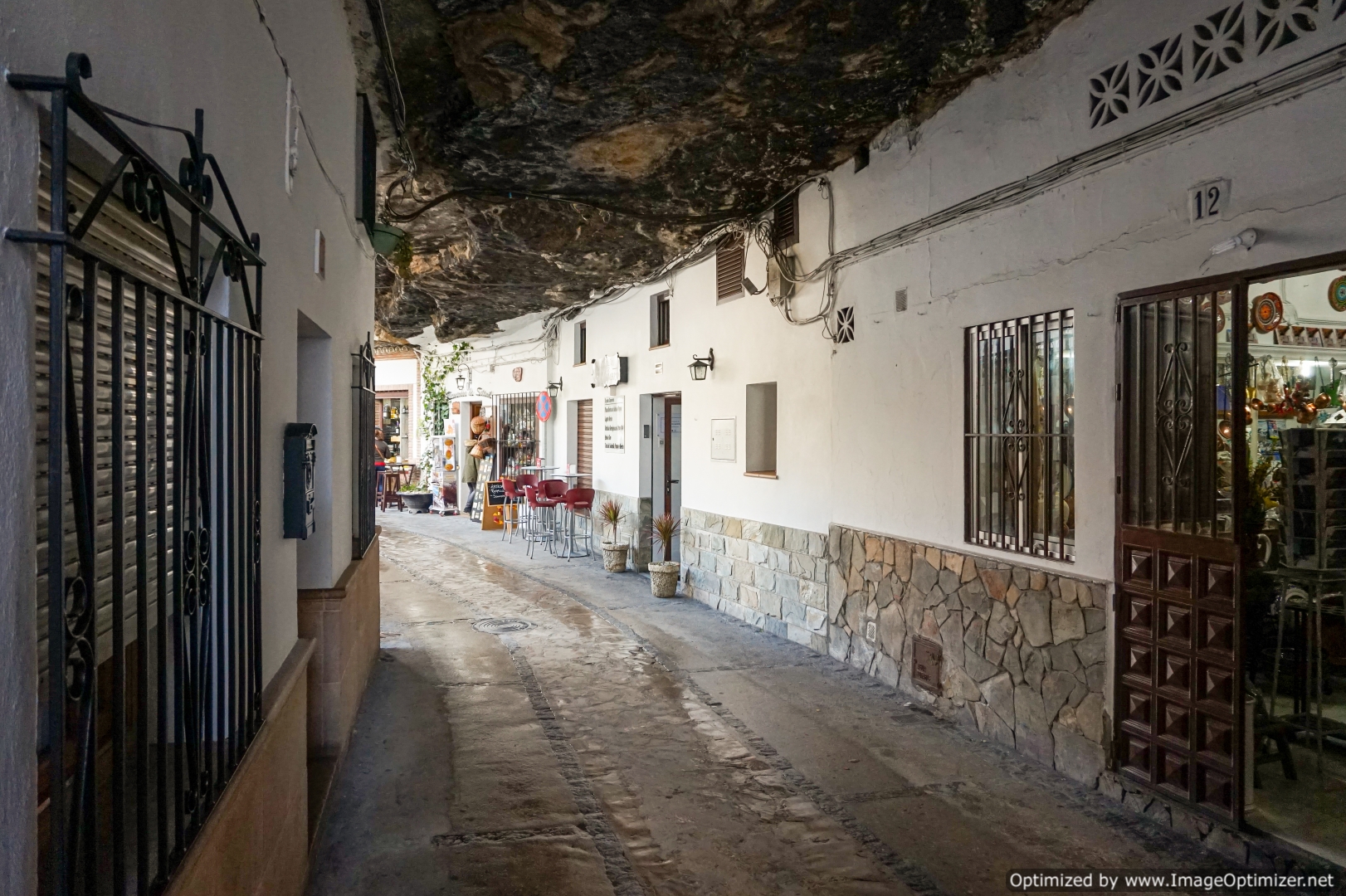
• Calle Cuevas de la Sombra — the darker and quieter counterpart to Cuevas del Sol. While the main street receives direct sunlight for much of the day, this section remains cooler and more atmospheric because the rock formations cover almost everything overhead. The contrast between the two streets is one of the things that makes exploring Setenil interesting despite the village’s relatively small size.
• Houses Built Into the Rock — beyond the famous streets themselves, the entire identity of Setenil revolves around architecture integrated directly into the cliffs. Instead of building on top of the landscape, the village adapted to it. Some homes and businesses appear almost swallowed by the mountain, creating a geological atmosphere unlike almost anywhere else in Spain.
• Castle Ruins (Castillo de Setenil) – the remains of the old Moorish fortress located above the village. While modest compared to castles in larger Andalusian cities, the area offers excellent views over the rooftops, valley and surrounding countryside. Climbing uphill also reveals how dramatically the village sits inside the rocky terrain.
Go early — parking becomes difficult later in the day. Two or three hours is enough; combine it with Ronda in the same day. It’s one of the most unusual places in Andalusia, and reason enough to consider staying overnight in Ronda.
What comes next?
In the last article of this series I will detail the Coastal Reset Route, a route that is very different from today’s route or the Big Five so stay tuned for that!
No Comments